AutoWriter AI
Sunday Meal Prep for Five High-Protein Vegan Lunches: A Routine That Actually Sticks
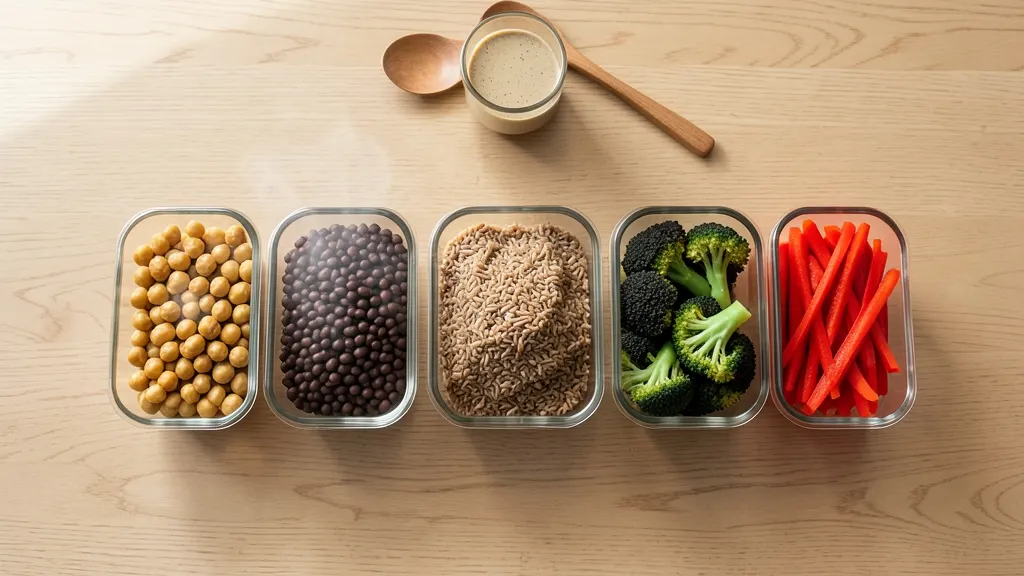
Five different high-protein vegan lunches for the work week, made in about two hours on a Sunday. That's the whole promise, and it's achievable because you're not cooking five recipes. You cook four base components once (a protein block, a grain, a tray of roasted vegetables, two sauces) and recombine them into five lunches that don't taste like the same bowl five times over. Below is the shopping list, the cooking order, the assembly templates and the packing rules that keep Thursday's lunch from turning to mush.
Table of contents
- If you're new to meal prep, start with the four-component method
- If you're shopping on a budget, buy these proteins first
- If you have two hours, cook in this order to use the oven and stove in parallel
- If you want five different lunches, use these recombination templates
- If you're packing for the week, keep these components separate
- If your lunches turn out bland or mushy, fix these three things
- If you want the routine to improve, do this Sunday-night debrief
If you're new to meal prep, start with the four-component method
Cook one protein block, one grain, one tray of vegetables and two sauces. That's it. Five containers come out of those four things, and none of them tastes like a rerun.
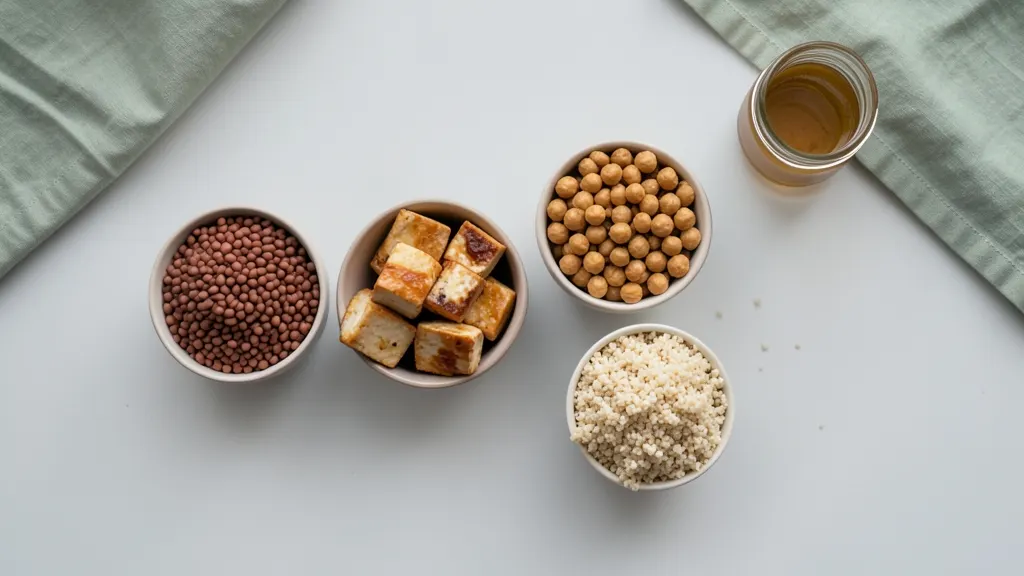
The four components:
- Protein block: one batch of something dense and savoury, like marinated baked tofu, crumbled tempeh or a thick lentil stew.
- Grain: a big pot of rice, farro, quinoa or couscous, cooked firm and cooled fast.
- Roasted vegetable tray: whatever's cheap and in season, cut to a similar size so it cooks evenly.
- Two sauces: one creamy (tahini-lemon, soy yoghurt with garlic) and one sharp or spicy (chimichurri, chilli-lime). Two is the minimum for variety, and they do most of the heavy lifting on flavour.
Recombination is the whole trick. Each lunch takes a different proportion of the bases, a different sauce, and one fresh garnish added on the day: shredded cabbage, cucumber, herbs, pickled onion, a squeeze of lime.
Monday might be rice, tofu, broccoli and tahini sauce. Thursday is the same rice and tofu with roasted peppers, a spoon of the chilli sauce and a handful of fresh coriander. Different texture, different heat, different colour.
That's why this dodges the "everything tastes the same by Wednesday" problem. You're not eating the same meal five times. You're eating five meals built from the same shopping list.
If you're shopping on a budget, buy these proteins first
Here's what to put in the trolley for one person's five lunches. Amounts assume you're cooking the full Sunday batch; halve them for a short week.
- Firm tofu, 2 blocks (about 400g each). Buy firm or extra-firm, not silken. Silken tofu is mostly water and falls apart in a pan, so it's wrong for batch cooking. Firm tofu presses drier, browns properly and holds its shape in a container for days.
- Tempeh, 1 block (about 200g). Pricier than tofu but it's dense, so a little goes far. Crumble or cube it and it survives reheating better than most proteins.
- Red lentils, 1 cup dry. They cook in about 15 minutes with no soaking and thicken into a stew that reheats well. Usually the cheapest protein per gram on this list.
- Chickpeas, 2 cans or 3 cups cooked. Keep the liquid from one can; it whisks into a sauce base.
- Edamame, 2 cups frozen. High protein for a vegetable, and they defrost in the lunchbox.
- TVP (textured vegetable protein), 1 cup dry. Rehydrate in stock for a mince-like filling. Very cheap per gram of protein, though it needs heavy seasoning.
- Hemp seeds, 1 small bag. Stir into yoghurt or scatter on top for texture.
- Nutritional yeast, 1 tub. Savoury, cheesy flavour; use it generously.
- Tahini, 1 jar. The backbone of a sauce that takes two minutes.
- Soy yoghurt, 1 large tub. For dressings and breakfast-adjacent lunches.
On cost: red lentils, TVP and chickpeas usually come out cheapest per gram of protein, with tofu and tempeh costing more but buying back time. For a wider list, see these protein sources for vegans.
If you have two hours, cook in this order to use the oven and stove in parallel
The whole session runs on one oven and two hob burners, so the order matters more than the speed. Work through these five stages back to back and you should be packed and done inside two hours.
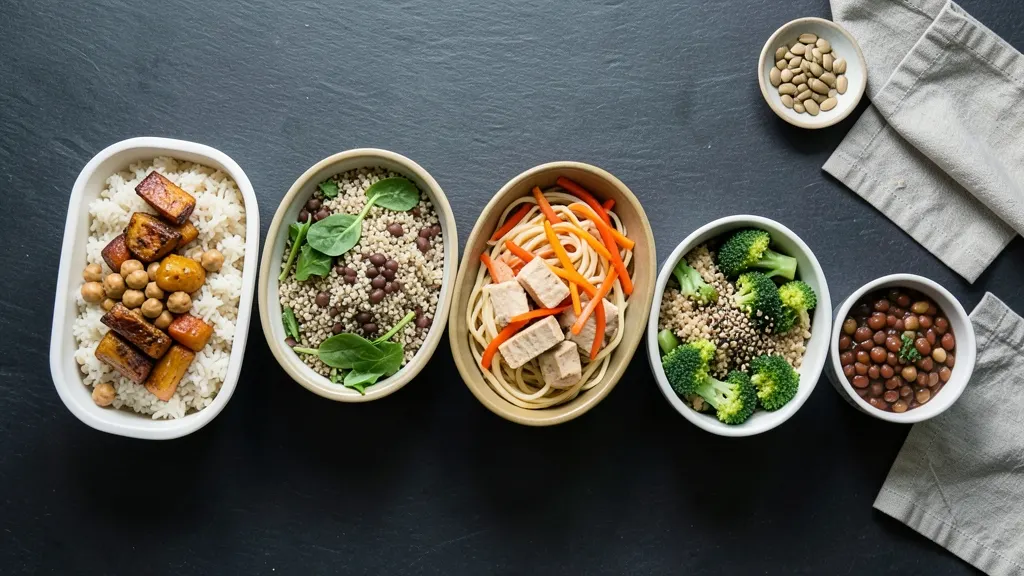
- Preheat the oven to 220°C and start the grain (0:00). Rinse your rice or quinoa, add it to a pot with the right water ratio, bring to a boil, then clamp the lid on and drop to the lowest heat. Expected result: by the time you finish step 2, the grain is tender and the water has been absorbed. Don't stir it; stirring releases starch and gives you gluey rice.
- Press the tofu and chop the vegetables (0:10). Wrap the firm tofu in a clean tea towel under a weighted plate. While it presses, cut your roasting vegetables into even, bite-sized pieces. Expected result: the tofu has shed enough water to brown later instead of steaming, and the veg is all one size so nothing burns at the edges while staying raw in the middle.
- Get the veg in the oven, then start the lentils and chickpeas (0:25). Toss the vegetables in oil and salt, spread them on one tray in a single layer (use two trays rather than crowd one), and slide them in. Put red lentils on one burner and drained chickpeas on the other. Expected result: the lentils go soft and collapse in roughly 15 minutes; the chickpeas just need heating through and a little colour. Crowding the tray is the classic mistake: the veg steams and turns limp.
- Pan-fry the tofu and tempeh in batches, making sauces in the gaps (0:45). Cube the pressed tofu and slice the tempeh. Fry each batch in a hot pan with a little oil until golden, then set aside. While each batch cooks, whisk your two sauces in jars. Expected result: crisp edges on the tofu, and two sauces ready to go. Overcrowding the pan is what makes tofu go soggy, so give each piece room.
- Cool everything separately before packing (1:30). Spread the grain, veg, tofu and tempeh on separate trays or plates to cool, uncovered. Expected result: no trapped steam, so nothing goes limp or watery in the fridge. Pack only once everything is at room temperature.
If you want five different lunches, use these recombination templates
| Day | Base | Protein | Fresh element to add that morning |
|---|---|---|---|
| Monday | Rice | Red lentils + roasted vegetables + tahini sauce | Chopped parsley, squeeze of lemon |
| Tuesday | Rice | Firm tofu stir-fried with vegetables + soy-yoghurt sauce | Sliced spring onion, chilli flakes |
| Wednesday | None (salad) | Tempeh + chickpeas + hemp seeds + nutritional yeast | Grated carrot, chopped cucumber |
| Thursday | Rice | TVP + black beans (or chickpeas) + salsa | Chopped tomato, coriander, lime |
| Friday | Rice or other grain | Edamame + roasted vegetables + leftover sauce | Fresh herbs, lemon zest |
The pattern is one grain, one protein, one sauce, and one thing that was never cooked. That last column matters more than it looks. A lunch assembled on Sunday and eaten on Thursday has lost its crunch and much of its smell; a handful of raw herbs or chopped veg stirred in at 8am brings both back.
Note how the sauces rotate: tahini on Monday, soy yoghurt on Tuesday, whatever's left on Friday. If you made two sauces on Sunday, you have enough variety for five days without cooking five meals.
Two practical notes. Keep the tempeh salad undressed until the morning, or the chickpeas will drink the dressing and the hemp seeds will go soft. And on Thursday, add the salsa or tomato fresh rather than packing it on Sunday, since TVP absorbs liquid and the bowl will turn into a stew by lunchtime.
If a combination feels flat, the fix is usually acid or salt, not another ingredient. Lemon, vinegar, or a pinch of salt stirred in at the last minute will do more than a third sauce.
If you're packing for the week, keep these components separate
Five days in the fridge is a long time for wet food to sit next to dry food. Pack with that in mind:
- Grains and roasted vegetables: they can share a container, since both are already cooked and firm. Keep them dry-ish (drain grains well, blot any oily tray veg) and never let sauce pool at the bottom.
- Tofu, tempeh and seitan: their own container, away from anything wet or acidic. A squeeze of marinade is fine; sitting in a puddle of it for five days is not. Same rule applies to cooked beans if you're using them as the protein that week.
- Sauces: small jars or a divided compartment, added just before eating. Tahini dressing thickens in the cold anyway, so loosen it with a splash of water on the day.
- Fresh garnishes: herbs, lemon wedges, chopped cucumber, shredded cabbage. Add these on the morning you take the box, not on Sunday.
- Food safety: cool cooked food quickly (spread it out rather than leaving a deep pot on the counter), refrigerate promptly, and follow official guidance for how long cooked food keeps. If in doubt, freeze Thursday's portion on Wednesday night.
If your lunches turn out bland or mushy, fix these three things
Bland and mushy usually come from the same handful of habits. Fix these and the same base components taste completely different.
- Underseasoning. Salt every component while it cooks, not once at the end. Salt the grain water, salt the tofu before it hits the pan, salt the vegetables before roasting. Then taste each batch once it's off the heat and adjust. Food seasoned in layers tastes fuller at fridge temperature, when flavours dull.
- Overcooked grains or pasta. Cook to just tender, then drain and rinse under cold water to stop the cooking. Slightly underdone is safer than soft, because reheating finishes the job.
- Wet grains or vegetables. Spread grains on a tray or wide bowl to cool and steam off before packing. Roast vegetables until the edges brown, not until they're soft and steaming; crowded trays trap moisture, so give them space.
- No texture. Add crunch at packing time, not on Sunday: toasted seeds, chopped cabbage, or toasted nuts. They stay crisp and make a soft lunch feel like a meal.
If you want the routine to improve, do this Sunday-night debrief
Ten minutes on Sunday night, before you put the containers away, is what turns a one-off cook into a routine. Run this checklist while the week is still fresh:
- Name the best lunch and say why. Was it the texture (crunch from fresh veg, crisp tofu edges), the flavour (sauce, salt, acid), or how full you felt? That tells you which component to protect next week and which to change.
- Check what ran out or got left behind. Half a jar of sauce or a sad pile of grains means your quantities are off. Note the gap on the shopping list now, not on Saturday.
- Write down the total time and where you felt rushed. If the oven tray and the lentils landed at the same moment, shift one task earlier next Sunday.
- Pick exactly one change for next week. Double the sauce, cook more lentils, roast the veg in a hotter oven. One tweak per week keeps the routine stable.
The rule of thumb: if you can't name one concrete change, you didn't debrief, you just tidied up.
Frequently asked questions
How much protein should I aim for in a vegan lunch if I'm active?
A common target for active adults is roughly 20 to 30 grams of protein per main meal, though needs vary with body size, training load and goals. Build each lunch around a firm protein block like tofu, tempeh or lentils, then add a smaller top-up from grains, seeds or edamame. If you have specific targets or a medical condition, ask a registered dietitian rather than guessing.
Can I freeze these lunches to make them last longer?
Yes, but freeze components rather than finished bowls. Curries, stews, cooked grains and plain roasted vegetables freeze well; sauces split when frozen, and fresh salad or herbs go limp. Freeze portions flat in labelled containers, thaw overnight in the fridge, and add the sauce and crunchy elements after reheating.
What can I use instead of soy if I'm avoiding it?
Lentils, chickpeas, black beans, split peas and hemp or pumpkin seeds all carry solid protein without soy. Seitan works if you tolerate gluten, and pea-protein mince or crumbles swap in for tofu in sauces and tray bakes. Keep a soy-free sauce in the rotation so the lunches don't lean on tamari or miso for flavour.
How do I scale this routine for two people without doubling the cooking time?
Cook the same four components but double the batch size, not the number of recipes. Use two trays on one oven shelf and the largest pot you own, which usually adds 15 to 20 minutes rather than another two hours. Pack ten containers instead of five, and split the chopping between two people to keep the Sunday session short.