AutoWriter AI
How to Crate Train a Puppy in Two Weeks: A Realistic Day-by-Day Plan That Handles the Crying
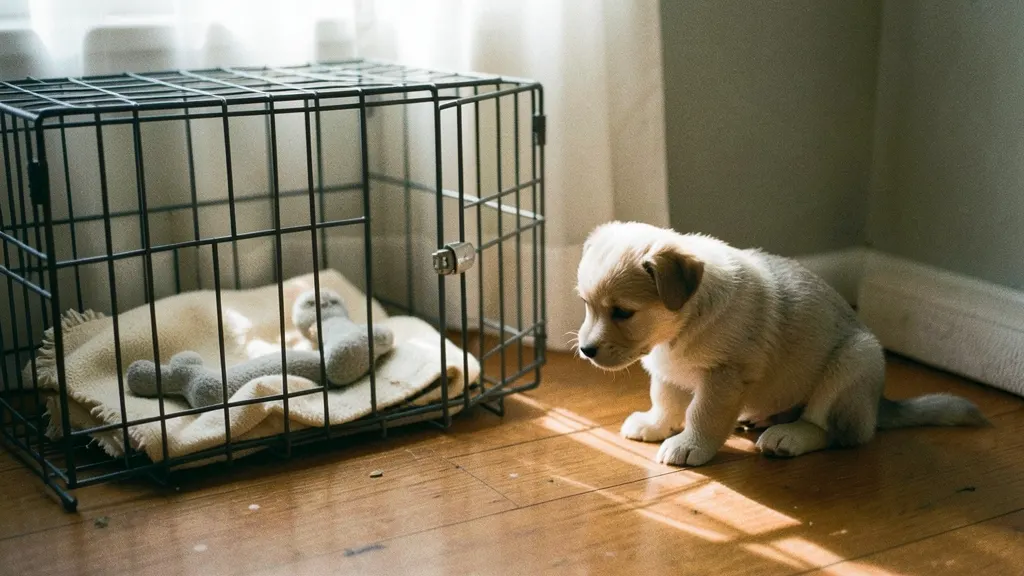
Two weeks of crate training buys you a puppy who walks in on their own, settles for short calm stays and sleeps at night with scheduled potty breaks. It does not buy full bladder control or long daytime confinement. The plan works by reading the crying instead of picking a side: wait, offer a quiet potty break, or adjust the setup. Crate, feeding and potty routines run as one system, so the schedule you already keep for meals and toilet trips does most of the work.
Table of contents
- What should I buy and set up before the first session?
- How do I introduce the crate without pushing the puppy in?
- What does a two-week crate training schedule actually look like?
- How long can my puppy actually hold their bladder?
- How do I tell protest crying from genuine distress?
- Should I ever let the puppy out while they are crying?
- What if the puppy is fine in the crate by day but screams at night?
What should I buy and set up before the first session?
Before the first session, get the kit right. Most early crate problems trace back to a crate that is too big, too open, or in the wrong room.
- Crate size: big enough for the puppy to stand without ducking, turn around, and lie flat on their side. Buy for adult size and use the divider panel to shrink the space as they grow. Too much room invites a toilet corner at one end and a bed at the other.
- Bedding: something the puppy cannot shred and swallow. A flat pad or a small blanket you can wash daily beats a fluffy bed with a zip and foam inside. Check it each morning for chewed edges.
- Crate cover: a fitted cover or a blanket over the top and two or three sides. Leave one side open for airflow and a view out. The aim is a den, not a sealed box.
- Crate-only treats: a high-value treat the puppy gets nowhere else, plus a stuffed food toy and one safe chew. These are your entry tools for the next two weeks.
- Location: the crate in or beside your bedroom for the first weeks. Night potty breaks and settling are far easier when the puppy is within arm's reach. A second crate in the main living area helps if you have space.
- Puppy pen or baby gate: a safe daytime zone that is not the crate, so the puppy is not confined to one small space all day.
Two rules from day one: the crate is never used as punishment, and a young puppy is never left in it for a full workday.
How do I introduce the crate without pushing the puppy in?
Days one to three are about building a positive association, not testing the puppy's tolerance. Keep sessions to a couple of minutes, end on a win, and stop while the puppy still wants more.
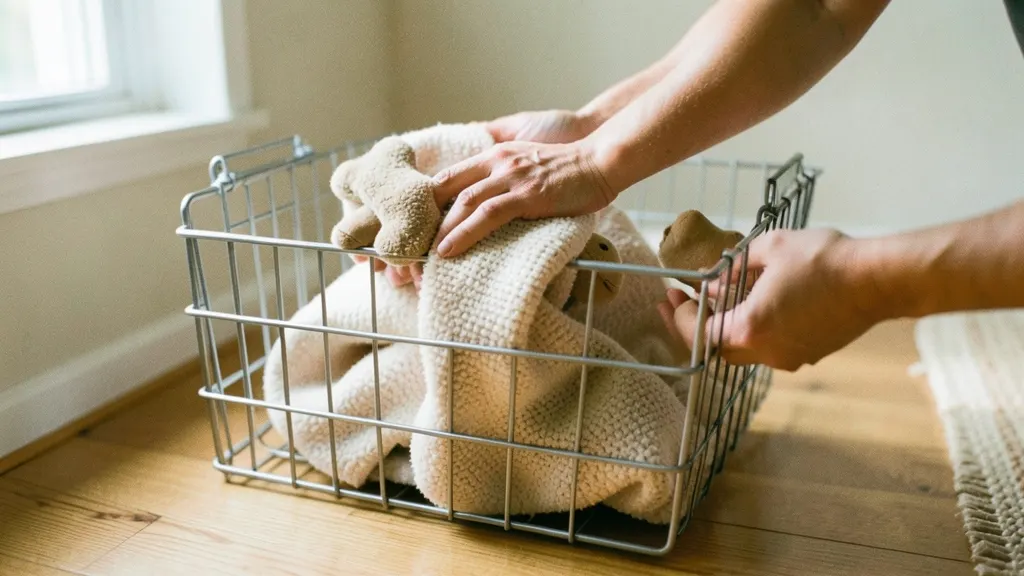
- Toss a treat inside and let the puppy walk out. Don't close the door, don't block the exit, don't pick them up. Repeat five or six times. A puppy who can leave whenever they like learns the crate is not a trap, and that is the whole foundation.
- Feed meals in the crate with the door open. Put the bowl at the back, let the puppy eat at their own pace. Once they are eating confidently, close the door for a few seconds while they eat, then open it before they finish. This pairs the closed door with something good rather than with being left.
- Add a cue as the puppy steps in. Say "crate" or "bed" just as they cross the threshold, then mark and reward any voluntary entry. The word only becomes a cue if it is attached to a choice the puppy is already making.
- Build duration in seconds, not minutes. Two seconds, five, ten, then open the door before the puppy asks. Add a chew toy or safe chew toys for a teething puppy to give them something to do in there.
- Never push or shove the puppy in. If they back out, the step was too big: drop back to tossing treats and let them re-enter on their own. Repeating the push teaches the puppy to avoid the crate entirely, and you will spend the next week undoing it.
What does a two-week crate training schedule actually look like?
| Days | What the puppy does | Door | Where you are | Session length |
|---|---|---|---|---|
| 1–3 | Walks in on their own, eats meals inside, sniffs and settles | Open | Next to the crate | 5–10 min, several times a day |
| 4–6 | Eats or works on a stuffed food toy inside | Closed | Sitting beside the crate | Seconds building to 1–2 min |
| 7–9 | Calm stays after the food toy is finished | Closed | A step or two away | A few minutes, plus first short night stretches |
| 10–12 | Settles with a chew while you leave the room | Closed, crate covered | Out of sight | 5–15 min |
| 13–14 | Repeats the above at varied times and in varied moods | Closed | Mixed | Short, always ending on a win |
The ladder only works if each crate session is anchored to the routine you already have. Put the puppy on a potty break first, then straight into the crate for a meal or a food toy, then out for another potty break before a nap. A tired puppy with an empty bladder settles far faster than a rested one who is about to need the garden.
This is why the crate schedule should sit inside your existing puppy feeding schedule rather than compete with it. Mealtimes become crate times, potty breaks become the bookends of every session, and naps happen in the crate because that is where the puppy already is. You are not adding a fourth routine to your day; you are stacking three routines on top of each other.
If a day goes badly, repeat the previous day rather than pushing forward. The days are a guide, not a deadline.
How long can my puppy actually hold their bladder?
The rule of thumb you'll see quoted most often is roughly one hour of bladder control per month of age, plus one. So a two-month-old puppy might manage around three hours, a three-month-old around four. Treat that as a starting estimate, not a schedule you can rely on.
Breed size matters: small and toy breeds often have smaller bladders and shorter tolerance than the maths suggests. Water intake, when meals land, and plain individual variation all shift the number. Some puppies comfortably exceed the estimate; others fall well short of it.
Very young puppies usually cannot last a full night. Plan to get up, often more than once in the first weeks, rather than hoping the puppy will hold on. Set meals at fixed times, keep water available but manage the evening (offer it freely earlier, then taper close to bed), and take a last potty break right before lights out.
A genuine need tends to look restless and purposeful: circling, sniffing, sudden escalation shortly after the puppy settled. Protest often starts the moment the door closes and follows a pattern. If a puppy seems unable to hold urine at all, or is urinating far more often than you'd expect for their age, ask your vet.
How do I tell protest crying from genuine distress?
| What you see | Protest | Genuine distress |
|---|---|---|
| Onset | Starts soon after the door closes | Often builds over minutes, or spikes the moment you step away |
| Sound | Loud, rhythmic, almost theatrical | Escalating, frantic, high-pitched, with pauses for gasping |
| Body | Loose, may lie down between bouts | Tense, panting, drooling, wide eyes |
| Crate behaviour | May paw once or twice, then stop | Clawing or chewing at the bars, digging at the tray, trying to force the door |
| Response to you | A calm "settle" often interrupts it briefly | Nothing you say reaches them |
| Settling | Quiet within a short window | Does not settle, or restarts the moment you leave the room |
Timing matters as much as body language. Crying that kicks off after the puppy has been quiet for a while usually points to a full bladder rather than a complaint. A puppy who has slept twenty minutes and wakes vocalising is asking for a toilet trip, not testing you.
Use the table as a decision rule, not a label. Protest: wait briefly, stay nearby, keep it boring. Likely potty need: one quiet, lights-low trip outside, then straight back in. Distress: change the plan. Shrink the step, add enrichment before the session, or cut the time.
Nothing here treats crying it out as safe or necessary. Repeated panic is information: it means the ladder is too steep, not that the puppy needs to toughen up.
Should I ever let the puppy out while they are crying?
Yes, you can open the crate while the puppy is crying. The trick is when and how.
Wait for a pause, even a half-second one. Puppies breathe between barks. Open the door in that gap, not at full volume, so the puppy learns that quiet is what opens doors. If you only ever open at the peak, you teach escalation.
Then make the exit boring:
- Lead straight outside for a potty break. No chat, no cuddles, no game.
- If nothing happens, straight back in. Calmly, no apology.
- Save the fuss and treats for when the puppy is quiet inside the crate.
Never shout, thump the crate or spray anything at it. Fear makes the next session harder, and you need this crate to stay safe for months.
If the puppy is genuinely panicking (scrambling, drooling, glassy eyes), get them out. The fix is an easier step tomorrow, not a longer session today.
Finally, jot down what happened before each bout: a nap, a meal, a visitor, a missed potty trip. After three or four days, the pattern usually names the cause.
What if the puppy is fine in the crate by day but screams at night?
Daytime success and nighttime panic are not a contradiction. Days are busy and distracting; nights are quiet, dark and lonely, and every small discomfort gets louder.
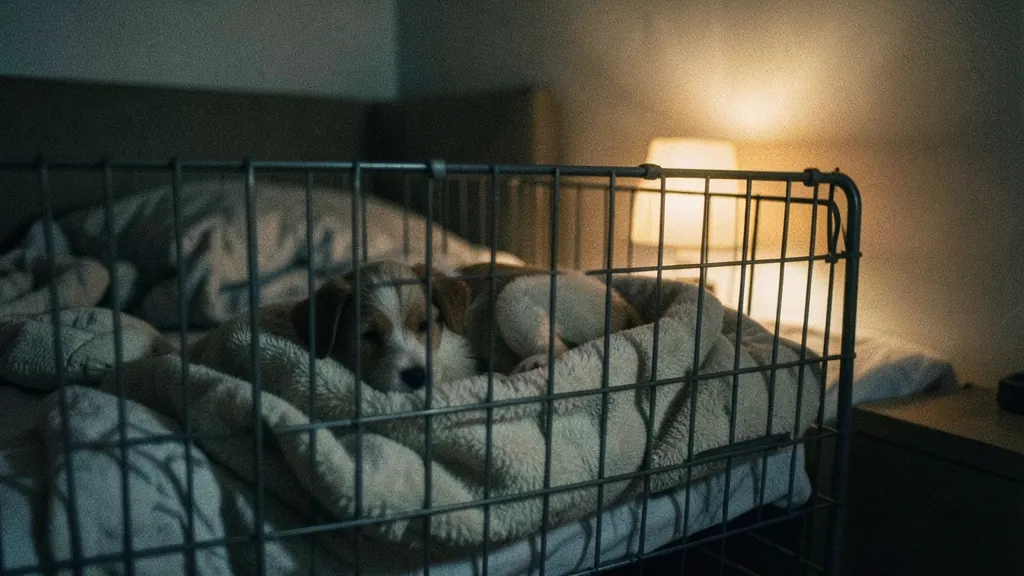
Build a fixed bedtime sequence and repeat it in the same order every night: exercise and some enrichment, last potty, a stuffed food toy or chew in the crate, cover on, lights low. Predictability does more for night settling than any single trick.
Night potty breaks should be boring. Lead on, low light, no talking or play, straight back to the crate. A puppy who learns that 3 a.m. is a business trip, not a party, settles faster.
If nights are the only problem, check three things before changing anything else:
- Daytime crate time may be too long, leaving the puppy overtired or wound up by bedtime.
- The puppy may be under-exercised, or over-tired from too little sleep during the day.
- The crate may be too warm, or too isolated from the rest of the household.
Did it work by day 14? The puppy walks in on cue, settles within a few minutes, sleeps with scheduled breaks, and stays calm for short daytime sessions.
If nights are still panicking after two weeks, shorten sessions, add enrichment, and speak to your vet or a qualified trainer, especially if the distress is severe.
When in doubt, ask one question: is this puppy learning that the crate is safe, or just getting tired? If it is the second, make the step smaller.
Frequently asked questions
Can I crate train a puppy while I'm at work, or do I need someone to let them out?
A young puppy cannot stay crated through a full workday. Their bladder is small and they need food, water and interaction at regular intervals. Arrange a midday visit from a friend, neighbour, dog walker or daycare, and keep the crate for short, supervised rests rather than the whole day.
Is it okay to put a puppy in the crate when they are already asleep?
Yes, and it is often the easiest way to build a positive association. Gently move a sleeping puppy into the crate and stay nearby so you can respond if they wake and fuss. Just avoid making the crate the only place they ever wake up, or they may start resisting sleep.
My puppy is fine in the crate at home but cries in the car crate. What's different?
The car adds motion, noise, engine vibration and a different view, so the crate no longer feels like the familiar den. Practise short stationary sessions in the parked car with the crate set up the same way as at home, then add very brief drives. Secure the crate properly and never leave a puppy alone in a parked car.
Should I use a crate or a puppy pen for daytime confinement?
Use both for different jobs. A crate is for sleeping and short calm rests, while a pen gives a puppy room to move, play with safe toys and toilet away from their bed. Many owners crate at night and use a pen during the day once the puppy is comfortable in the crate.
At what age can I stop getting up for night potty breaks?
There is no fixed age, because it depends on breed size, growth and individual bladder control. Most puppies need at least one night trip for several weeks and gradually stretch the gap as they mature. Keep the breaks boring and brief, and ask your vet if night waking continues well past the expected stage.