AutoWriter AI
Max-Cushion or Minimalist Trail Shoes: How to Decide for Your First Ultra
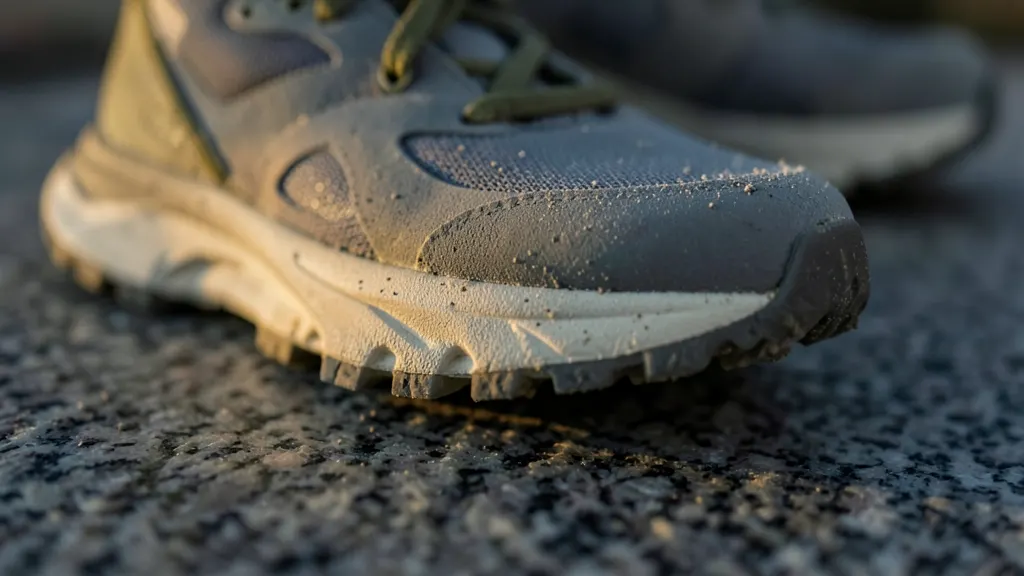
Your first ultra shoe should match the loading your legs can already handle and the ground your race actually covers. Cushioning, stack height and drop behave differently over six to twelve hours of trail than they do on a marathon, and the gap between max-cushion and minimalist is wider than the spec sheet suggests.
This is a comparison, not a philosophy war. We'll weigh both ends on the same criteria, then run a five-question self-audit and land on the middle path most shoe lists skip.
Table of contents
- What Actually Separates Max-Cushion From Minimalist, in Measurable Terms
- Why Cushioning Starts to Matter More After Hour Four
- The Stability Penalty of Going Maximal
- What You Give Up Going Minimalist, and What It Costs to Get There
- Rock Plate or More Foam: They Solve Different Problems
- Match the Shoe to the Course, Not to the Category
- The Self-Audit: Five Questions That Point You to an Answer
- The Middle Path Most Shoe Lists Skip
- Fit, Swelling and the Details That Decide Whether the Shoe Works at Hour Eight
- Choose Max-Cushion If, Choose Minimalist If, Choose Moderate If
What Actually Separates Max-Cushion From Minimalist, in Measurable Terms
Stack height and heel-to-toe drop are the two numbers you already read on road shoe specs, and they carry over. Stack height is the foam under your foot, measured at the heel and forefoot; it tells you how much material sits between you and the rock. Drop is the difference between those two figures, and it changes how your ankle and calf load over hours, not minutes. Behind both sits the midsole foam itself: type (EVA, supercritical foams, PEBA blends) and density. A thick slab of firm, dense foam behaves nothing like the same thickness of soft, light foam.
The protection and grip axes are separate from cushioning:
- Rock plate: a stiff insert under the forefoot or full length that spreads point loads. It adds protection without adding height.
- Outsole lug depth and compound: depth governs bite in mud and loose ground; the rubber compound governs grip on wet rock. Shallow, soft rubber and deep, hard rubber are different tools.
- Upper and toe bumper: the upper decides drainage, breathability and how the shoe behaves when your foot swells. The toe bumper is your protection against roots and scree.
Ground feel and proprioception mean the same thing in plain terms: how much terrain information reaches your foot. A thin, firm shoe lets you sense edges and camber through the sole. A tall, soft one filters that information out. Neither is correct in itself; it is a trade between feedback and filtering.
| Axis | Max-cushion end | Minimalist end |
|---|---|---|
| Stack height | High, heel and forefoot | Low |
| Drop | Varies widely | Often low or zero |
| Midsole | Thick, often softer, lighter foam | Thin, usually firmer, denser |
| Rock plate | Sometimes, sometimes skipped | Often present |
| Lugs | Moderate to deep | Usually present, sometimes shallow |
| Upper | More structure, more volume | Closer, thinner |
| Ground feel | Low | High |
Two honest caveats. First, the categories blur: a tall shoe on a firm, wide platform behaves quite differently from a soft, tall one, so read platform width and foam firmness, not just stack height. Second, "minimalist" on trails rarely means barefoot-style. Most trail minimal shoes still have lugs and a rock plate; they are low and firm, not unprotected.
Why Cushioning Starts to Matter More After Hour Four
Your 10k logic says: pick the shoe that feels fastest and most protective for forty minutes. An ultra runs that logic through a different machine. The shoe is no longer a short-term interface with the ground; it becomes part of how you hold form for six, eight, ten hours.
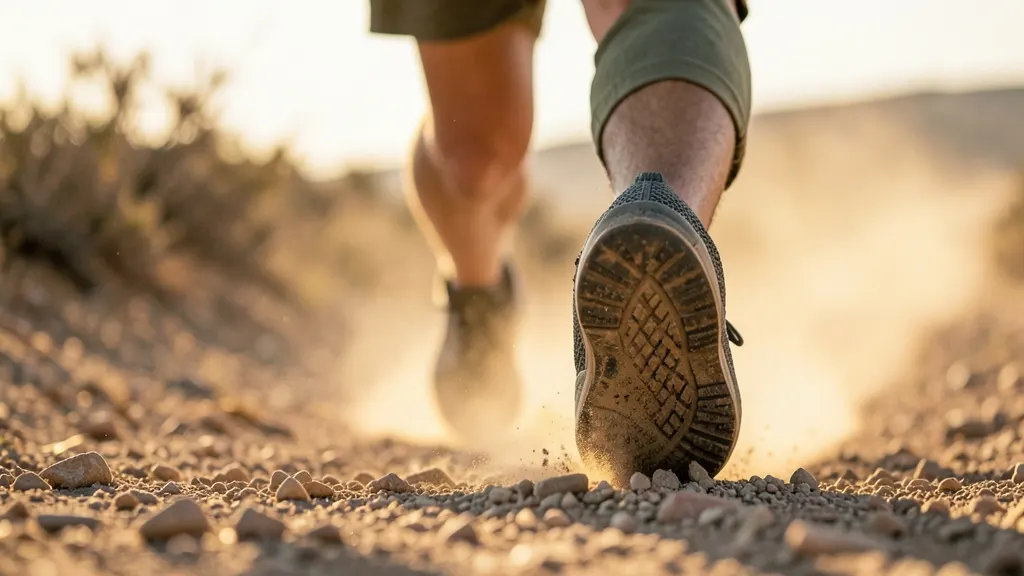
Muscles absorb impact. Early in a race they do it well and without much thought. Late, they are tired, and their ability to keep soaking up landing forces drops. That work does not vanish. Some of it moves into the shoe. A thin, firm midsole that felt lively at hour one can transmit every rock and root straight into legs that have nothing left to give.
But more foam is not automatically the answer. There is a real difference between cushioning that protects and cushioning that dulls. A very soft, deep midsole can feel wonderful when you are fresh and vague when you are not: less feedback about where your foot has landed, less sense of the ground under you. On tired legs that vagueness is a cost, not a comfort.
Form drifts under fatigue. Road runners know this from marathon pace: the last 10k is a different stride. On trails the drift is bigger, because the terrain keeps asking for small corrections. A shoe that rewards precise, light form early may punish the sloppy version of you that turns up at hour seven. The reverse is also true: a shoe that feels clunky and overbuilt on a fresh 5k can be the one still doing useful work when your calves have checked out.
That is the argument for matching the shoe to the duration, not for buying the most cushioning on the shelf. The question is not "how much protection can I get?" It is "what will still be helping me at hour six, given how I actually run when tired?" Answer that honestly and the category often picks itself.
The Stability Penalty of Going Maximal
A taller stack lifts your foot further from the ground. That sounds obvious, but the consequence is mechanical: the ankle sits higher above the contact patch, so any tilt of the shoe becomes a longer lever arm. On off-camber grass or a loose rocky descent, a small sideways wobble at the outsole turns into a bigger roll at the ankle. Your foot has further to travel before it finds the ground and corrects.
Two things separate a stable max shoe from a wobbly one:
- Platform width, especially at the forefoot. A wide base gives the lever less room to swing. A tall shoe on a narrow last is the worst combination.
- Foam firmness. Very soft foam compresses unevenly under load, so the shoe tilts before the midsole resists. Firmer foam in the same stack height feels more planted, at the cost of some plushness.
Drop changes how the whole package behaves. A high drop tips you forward onto the forefoot, which can feel efficient on smooth climbs but makes the tall heel more likely to catch and roll on descents. A lower drop keeps you more neutral but loads the calf and Achilles, which matters if you are not used to it. Drop and stack interact: a tall, high-drop shoe stacks leverage at the rear.
Rather than trusting marketing, check four things on the shoe:
- Measure the forefoot platform width across the widest point and compare it with your road shoe.
- Twist the shoe lengthways and press the midsole sideways to feel lateral rigidity.
- Hold the heel and try to roll the rearfoot off the platform.
- Lace up and lean hard into a side slope: does the upper hold your heel down, or does it slide?
What You Give Up Going Minimalist, and What It Costs to Get There
The minimalist case is not a marketing story. On tight, rooty singletrack, a thin sole lets you feel the edge of a rock before you commit weight to it. That feedback changes how fast you can decide where to put your foot. Runners who are comfortable in minimal shoes often look smoother on technical ground because they are reacting to the trail rather than guessing through a layer of foam. That is a real advantage, and it is the one max-cushion shoes cannot buy back.
The cost is not on the receipt. It is in the loading.
When you drop protection, your calf, Achilles and foot take more of the work on every step. That is a change in load, not a change in preference. Your body adapts to load gradually, and it adapts on the timeline of tissue, not the timeline of a training plan you found online.
How long that takes depends on things nobody can see from your Strava. Current weekly volume, injury history, how much of your running is already on trail rather than road, and how much climbing and descending you do all shift the answer. A road runner with a long marathon base and a history of calf niggles is in a different place from one who has spent two years on hilly trails in firm shoes. This is why any article quoting a fixed number of weeks is guessing.
Progress in small steps: a short trail run a week, then more, keeping the rest of your running unchanged.
Stop progressing and see a physio or clinician if pain is sharp, localised, worse each run, or persists into the next day. Morning stiffness that eases quickly is one thing; a tendon that hurts to walk on is not something to run through.
Rock Plate or More Foam: They Solve Different Problems
A rock plate and a thick midsole get marketed as if they do the same job. They don't. A rock plate is a stiff insert, usually plastic or composite, sitting between outsole and midsole. It spreads point pressure from a sharp edge across a wider area. Foam absorbs impact energy from your landing. One is about edges, the other about landings.
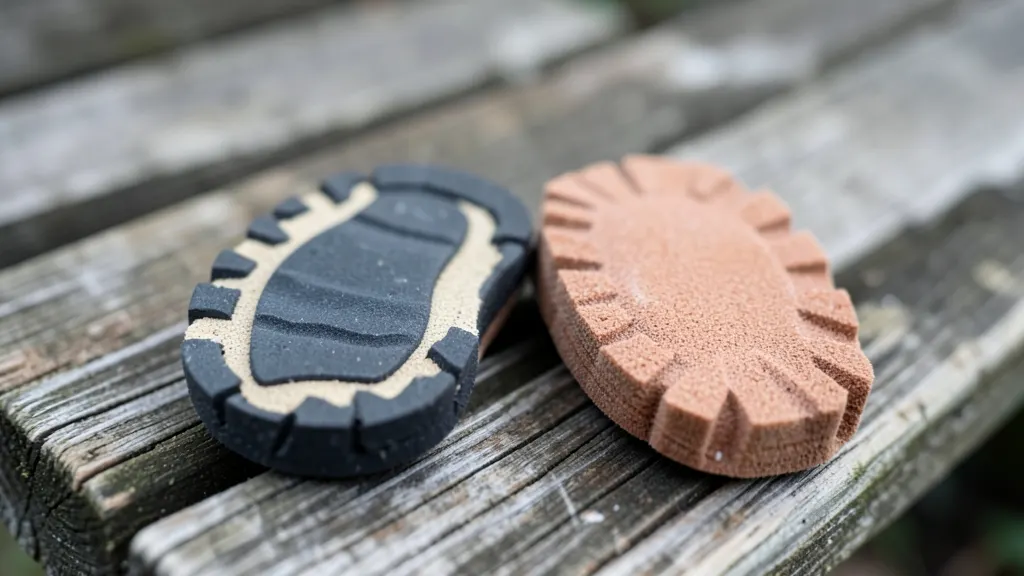
That's why a thin, firm shoe with a plate can feel surprisingly protected. It doesn't feel soft, because it isn't. Your foot still reads the ground, but a stone under the arch doesn't stab through. Flip it around: a tall, soft shoe with no plate can bruise you on sharp rock. The foam compresses under a concentrated point and passes the load straight through. Height alone isn't protection.
Lug depth is a third axis, separate from both. Deep lugs bite into mud and loose ground; shallow ones feel calmer and last longer on hardpack and fire road. A shoe built for soft ground will feel vague and wear fast on the surfaces a runnable ultra often includes.
The thumb test
Do this in the shop, not online:
- Press a thumb firmly into the midsole under the forefoot. Note how far it sinks and how quickly it springs back.
- Flex the shoe and feel for a rigid layer under the forefoot. Some plates are obvious; some are subtle.
- Compare two pairs. Ask which responds to pressure and which resists it.
A shoe that resists your thumb but flexes at the ball is plate-protected. A shoe that swallows your thumb has foam protection.
Match the Shoe to the Course, Not to the Category
Your race profile, not a shoe philosophy, should pick the category. Four terrain types pull the answer in different directions.
| Terrain type | What helps | What hurts | What to check on the shoe |
|---|---|---|---|
| Mostly fire road and smooth doubletrack | Cushioning, a smooth ride, moderate lug depth | Aggressive lugs that feel skittery on hardpack, stiff plates that flatten the ride | Midsole comfort over long road-like stretches, outsole that doesn't feel clunky on tarmac |
| Technical singletrack: roots, rocks, off-camber | Ground feel, a lower and wider platform, secure upper | Tall soft stack that feels vague and tips you on side slopes | Stack height, platform width, heel hold, how much you can feel the trail |
| Big climbing with long power-hike sections | A stiffer, more cushioned shoe underfoot on the hike | Poor heel hold that lets the foot slide, a forefoot that won't flex when you push off | Heel lock, forefoot flex point, weight on the climb |
| Wet, muddy ground | Lug depth and a sticky outsole compound | Either cushioning philosophy if the outsole can't bite | Lug depth, lug spacing, rubber compound |
Read the table by counting which row describes most of your race. A course that is 70 percent runnable fire road rewards cushioning; the lugs and plates that help on row two become dead weight. Flip it and a tall, soft shoe on row two gets vague exactly when you need precision. Row three is the sneaky one: hikers often want more shoe underfoot than they expected, but only if the heel stays put and the forefoot still flexes. Row four overrides the cushioning debate entirely.
To find your mix, pull the course profile and elevation chart from the race website. Read last year's race reports for phrases like "runable," "rooty," or "shoe-sucking mud." Then email the race organiser and ask what percentage is road, doubletrack, and technical trail. Most will tell you.
The Self-Audit: Five Questions That Point You to an Answer
Answer each question with a number or a yes/no, then read the pattern. Ten minutes, no shoe shopping.
- How many hours a week do you run, and what is your longest run in the last eight weeks? This is your current time-on-feet budget. A runner peaking at 60 to 70km a week with a recent 30km long run has tissue already used to absorbing repeated loading. Someone running 35km a week with a longest run of 18km has less margin, and a minimalist shoe adds a new load on top. Be honest about the second number, not the first.
- Have you had calf, Achilles, plantar or ankle trouble in the last two years? Any yes is a reason to change load slowly rather than a reason to rule out either category. If the problem is current or recurring, get it assessed by a physio before you change shoe type mid-build. Stack height and drop are variables in that conversation, not a diagnosis.
- Which road shoe do you race in, and how do you feel two days after a long run? If you race in a high-stack trainer and finish long runs feeling beaten up, you already lean on cushioning and the trail version of that instinct is max-cushion. If you race in a low, firm shoe and recover quickly, minimalist won't feel alien.
- What is the race terrain mix, and how much hiking do you expect? Estimate the split: fire road, runnable singletrack, technical ground, and the percentage you'll walk. Mostly runnable with little hiking points toward cushioning. Steep, rocky and hike-heavy changes the calculus, because a softer shoe under a long climb feels different from a soft shoe at hour seven.
- How many of your weekly runs will realistically be on trail before race day? Count them, don't estimate the intention. If the answer is one short run a week, you are asking your feet to adapt to trail on race day, which argues for more protection and a gentler transition.
Two or more answers pointing the same way is your starting category. A split result usually means the middle path, covered next.
The Middle Path Most Shoe Lists Skip
Most shoe lists sort trail shoes into two bins: plush and barely-there. That leaves out the category many road runners should be shopping in: moderate stack, a rock plate, and a wide platform.
This is not a watered-down compromise. It is a design choice with its own logic. The rock plate handles sharp stones and roots so the foam doesn't have to be thick enough to swallow them. The wide platform gives you a stable base without the tippiness that comes with the tallest stack heights. You get protection where it counts and ground contact where you need it.
For a first ultra, a firmer moderate shoe often beats both extremes. The softest shoes can feel vague and wobbly once your legs tire and your form drifts. The most minimal shoes ask for foot strength and tissue tolerance you may not have built yet. A moderate shoe sits in the range where most road runners already know how to run.
Then there's drop. Treat it as the dial you can leave alone. Keeping a drop close to what your road shoes use removes one novelty from the equation: your calves and Achilles aren't suddenly stretched into a new position while you're also adapting to uneven ground, longer descents and hike-a-bike climbs.
If you want ground feel to develop, don't force it through your race shoe. Buy the moderate pair for the start line and a second, more minimal shoe for short technique runs on easy ground. Let the feel build slowly, in parallel with your trail fitness, rather than betting your race on a transition you haven't finished.
Fit, Swelling and the Details That Decide Whether the Shoe Works at Hour Eight
Shoe category gets you in the right ballpark. Fit decides whether you can still walk at hour eight. These checks apply whether you land on max-cushion, minimalist or something in between.
- Size for the longer foot, and shop late in the day. Feet swell over hours of loading, and most people have one foot measurably longer than the other. Measure or try shoes in the afternoon or evening rather than fresh in the morning, then leave thumb-width room at the front of the longer foot. A shoe that feels snug at 9am can be a black-toenail shoe at hour eight. Pair the fit check with thin, seam-free trail running socks so you are judging the shoe, not a bulky sock.
- Heel hold and toe room are separate specs. A shoe can be generous up front and still lock the heel with a good lacing hold and a shaped heel counter. That combination matters more than the overall size number on the box: roomy toes with a slipping heel is the worst of both.
- Check the toe bumper and upper against your actual race terrain. Scree and rock gardens chew through thin uppers and soft bumpers; grassy and buffed singletrack is gentler. Look at where the upper creases when you flex it, since that is where it will rub once your feet spread.
- Check gaiter compatibility. Dust and grass seed work into a loose collar and stay there for hours. If your race is sandy, dusty or seeded, look for a heel tab or attachment point and a snug collar.
- Break them in on trail, not at the start line. Do your breaking in trail shoes properly, including a long day in the exact socks and any insoles you plan to race in.
Choose Max-Cushion If, Choose Minimalist If, Choose Moderate If
The audit points to a category. Here is how to read the result.
Pick max-cushion if the course is mostly runnable, you want protection over eight or ten hours, and you accept that a tall, soft platform gives up some ground contact and ankle security on technical ground. That trade is real. If your race is fire road, jeep track and smooth singletrack, it rarely bites. If it is rocky and off-camber, plan to practise on that terrain before race day so your ankles learn the shoe.
Pick minimalist if the course is genuinely technical, you already handle high load without problems, and you are willing to spend months adapting rather than weeks. The purchase takes an afternoon. The adaptation takes a training block, and it should be built gradually alongside your ultra volume, not on top of it. If you cannot honestly say you have that time, this is not your first ultra shoe.
Pick moderate if you are unsure, your injury history argues for caution, or the course is mixed. A middle stack height with a rock plate covers more race profiles than either extreme, and it leaves room to move in either direction once you know how your body responds to long days on trail.
One last thing. The shoe is a single variable. Training load, time spent on race-like terrain and hiking fitness carry more weight in how your first ultra goes than the foam under your foot. Get those right and either category can work. Get them wrong and no shoe will rescue the day.
Checklist before you buy:
- Course terrain mix, honestly assessed
- Your current weekly volume and injury history
- How much hiking the race demands
- Months available to adapt, not weeks
- Fit with room for swelling
- Rock plate versus foam, chosen for the actual problem
Frequently asked questions
Can I race my first ultra in my road shoes if the course is mostly fire road?
Sometimes, yes, if the surface is genuinely smooth and dry and your road shoes still have grip and a stable fit. The risks are poor traction on loose gravel or wet patches, thin uppers that let grit in, and less protection underfoot on rocky sections. Check the course profile and surface notes, and test the shoes on similar ground before race day.
How do I know if a trail shoe's stack height is too tall for me before I buy it?
Try them on uneven ground, not a flat shop floor: a curb, a grassy slope, a few steps. Tall stack plus soft foam can feel tippy on cambered or rocky trail, and that feeling shows up quickly when you turn an ankle. If you feel unstable walking and jogging on rough ground, that shoe is probably too tall for your ankles and hips right now.
Should I size up for an ultra because of foot swelling?
Many runners go up a half size for long efforts, but the fit matters more than the number. You want roughly a thumb's width in front of the longest toe and no pressure on the toes when you push your foot forward. Try shoes late in the day, and remember that a roomier shoe needs a secure midfoot or your foot will slide on descents.
Do I need gaiters for a first ultra, or are they a nice-to-have?
They are a nice-to-have unless your race has lots of sand, scree, snow or vegetation that gets into shoes. Grit inside a shoe over several hours is a common cause of blisters, so cheap lightweight gaiters can be worth it on loose courses. Check whether your shoe has a gaiter attachment point, and test the setup on a long run first.
If I buy a moderate shoe now, can I move to a more minimal shoe later in the same training block?
Usually not a good idea close to race day. Changing stack height or drop mid-block changes how your feet, calves and ankles load, and that adaptation takes weeks. Keep the race shoe consistent, and save any move toward less cushioning for the off-season, built up gradually.