AutoWriter AI
The Used Car Inspection Checklist: A Timed Walkthrough From Listing to Walk-Away
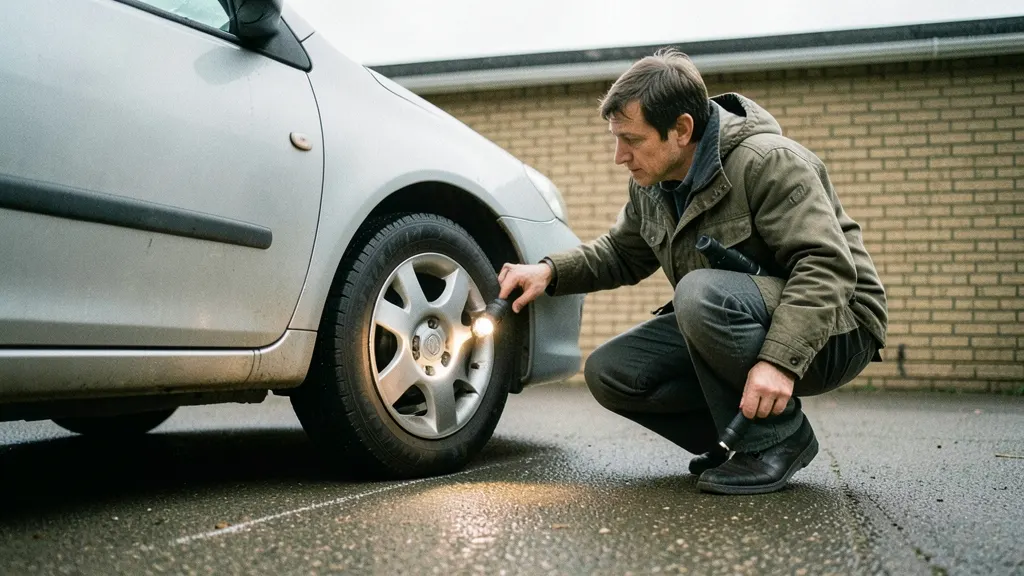
Most buyers believe a used car inspection is about knowledge: if you knew enough about engines, you would spot the bad ones. In practice, first-time buyers miss faults because they have no order of checks, so they spend twenty minutes on paint and never ask for the V5C.
What follows is a repeatable, timed walkthrough of one viewing. It sorts every check into three tiers: what you can verify yourself, what needs a cheap tool, and what a mechanic must handle. It ends with a clear go/no-go decision.
Table of contents
- The Desk Check: What to Verify Before You Contact the Seller
- The Three Tiers of Checking: What You Can Do, What Needs a Tool, What Needs a Mechanic
- The 5-Minute Walkaround: Panel Gaps, Paint and Glass
- Tyres, Brakes and Suspension: Reading Wear Patterns Like a Mechanic
- Water, Odour and the Interior: Checking for Flood Damage and Neglect
- Under the Bonnet Without Being a Mechanic
- The Cold Start and the Test Drive Handover
- Paperwork and Identity: V5C, VIN, Service History and Finance
- The 5-Minute Walk-Away Decision
The Desk Check: What to Verify Before You Contact the Seller
Ten minutes at a screen can eliminate half the cars on your shortlist before you spend a Saturday travelling to see them. Work through these steps in order and take notes as you go.
- Pull the MOT history (UK) and read the advisories, not just the pass/fail. Every test since 2005 is searchable online using the registration number. A car that passes with "corrosion near suspension mounting, close to limit" three years running is telling you something a single certificate hides. Repeated advisories on the same item are a pattern: either the owner ignored them or the problem is worsening.
- Chart the mileage across those records. Each MOT lists the odometer reading at test. Mileage should rise steadily between tests. A jump backwards, a long flat stretch, or a figure that barely moves year on year deserves a question before you travel. On older cars with paper service stamps, cross-check the stamped mileages against the MOT dates.
- Match the listing to the registration document. The make, model, colour and engine size in the advert should match the V5C (or title) details the seller shows you. Mismatches are rare but serious: wrong colour often means a respray, wrong engine size can mean a cloned identity or a misdescribed trim.
- Audit the photos for what is missing. Sellers photograph what looks good. Be suspicious of listings with no nearside images, no rear quarter shot, or no engine bay photo. Those angles hide the most common accident repair zones and the most common leaks.
- Write down three questions before you call. Why are you selling? How long have you owned it? Has it been in any accident? Vague or shifting answers on the phone are cheaper to discover now than in person.
- Set your walk-away line in advance. Decide tonight what ends the viewing: no service history, a mileage discrepancy, a seller who will not let you see the V5C. Writing it down stops you negotiating with yourself in a stranger's driveway.
The Three Tiers of Checking: What You Can Do, What Needs a Tool, What Needs a Mechanic
You cannot become a mechanic in a driveway, and trying to will make you slower and less accurate. Split every check into three tiers and run them in order, so your own time is spent on what a novice can genuinely verify.
| Tier | Who | Tools | Covers | Cannot tell you |
|---|---|---|---|---|
| 1 | You | Eyes, hands, nose | Paperwork and VIN match, panel alignment, tyre condition and dates, fluid levels and colour, every switch and light, odour, water ingress | Anything inside the engine, chassis or ECU |
| 2 | You | OBD-II reader, magnet, torch, tread depth gauge | Stored fault codes, pending codes and readiness monitors; steel panel thickness clues; hidden corrosion in dark corners; precise tread measurement | Compression, bush wear, structural repair, erased codes |
| 3 | Paid mechanic | Ramp, compression tester, experience | Compression, suspension bushes, underbody corrosion, hidden structural repair, brake and clutch condition | Whether the price is fair |
An OBD scan is a starting point, not a verdict. A clean result means no codes are stored now. Faults can be cleared shortly before a viewing, and some reappear only after a full drive cycle. Readiness monitors showing "not ready" on a car that has supposedly been driven normally is a reason to ask why.
The magnet test has a similar trap. It will not stick to plastic bumpers, aluminium panels or composite bodywork, so a non-stick result proves nothing on its own. Compare readings across the same panel and against the opposite side of the car before drawing conclusions.
The rule that keeps this simple: if the car clears Tier 1 and you are serious about buying, book a Tier 3 inspection before any money moves. Treat that fee as part of the purchase price, not an optional extra.
The 5-Minute Walkaround: Panel Gaps, Paint and Glass
Five minutes of walking around the car in the right light will tell you more about its history than any seller's description. The goal is not to judge the car's beauty but to spot signs it has been apart and put back together.

- Pick daylight, not forecourt floodlights. Sodium or LED forecourt lighting flattens reflections and hides ripples. Park the car in open daylight, stand at a low angle along each panel and look down the length of it. Repainted filler shows as a wavy distortion in the reflection, especially on doors and rear quarters.
- Compare panel gaps side to side. Run a finger along the gap between door and wing, bonnet and wing, boot lid and rear panel. Gaps should be even and match on both sides. A noticeably wider gap on one side suggests a panel was removed, realigned or replaced.
- Hunt for overspray. Look at rubber window seals, wheel arch liners, door shuts, the edges of the windscreen trim and the gaps around lights. Fine paint mist on rubber or plastic is a strong hint of a localised repair.
- Read the glass date stamps. Every window carries a small etched code with a manufacturer mark and a date. Compare them across the car and against the build date on the VIN plate. One window dated later than the rest usually means it was replaced, so ask why.
- Magnet test, with care. A small magnet will not stick to filler over a steel panel, but it also will not stick to aluminium, plastic bumpers or composite panels. Treat a weak or absent pull as a prompt to look closer at that area, not as proof of damage.
- Check seatbelt tags. Pull each belt fully out and look at the date tag near the anchor. Belts dated later than the car, or frayed and stiff ones, are worth asking about.
Tyres, Brakes and Suspension: Reading Wear Patterns Like a Mechanic
Wear items are where neglect shows up cheapest to spot and most expensive to fix. Run these checks with the car parked on level ground, engine off.
- Tread depth across each tyre. Measure at the centre and both edges, on all four tyres. A tyre worn on one edge points to alignment or suspension problems; worn in the centre suggests over-inflation, worn on both edges under-inflation. Any of these means money soon.
- DOT date code. Four digits on the sidewall give week and year of manufacture. Tyres noticeably older than the car's recent history may be hardened even with tread left, which hurts grip in the wet.
- Brake discs. Look through the wheel spokes for a deep lip at the outer edge, heavy scoring or a blue tint. Lips and scoring mean replacement is due; blueing suggests overheating from hard use.
- Suspension bounce test. Press down firmly on each corner and release. The car should rise and settle within one rebound; a second or third bounce suggests worn dampers.
- Steering play. With the engine off, rock the steering wheel gently. Excessive free play before the front wheels begin to move points to worn components.
- Mismatched tyres. Different brands, sizes or tread patterns across an axle tell you the owner bought the cheapest option at the moment of need. That habit rarely stops at tyres.
Budget for anything you find. These are negotiating points, not necessarily walk-aways.
Water, Odour and the Interior: Checking for Flood Damage and Neglect
Open the door and smell before you get in. Damp, mildew or a sharp chemical edge are each worth a question, and so is a blast of air freshener: heavy scent is often used to cover something. Ask the seller to leave the car closed up for ten minutes before you arrive so the smell has had nowhere to go.
- Lift the mats and check the carpets. Press your palm into the footwell carpet, especially the rear ones. It should be dry and firm. Soft, spongy or faintly musty carpet means water has been sitting there.
- Open the spare wheel well and look inside. Water pools at the lowest point, so this is where flood damage shows first. Look for standing water, fresh rust on the jack or tools, and a tide line of silt or grit on the metal.
- Pull each seatbelt all the way out. Webbing that has been soaked often shows a wavy water mark or a stiff, discoloured patch near the anchor. Then look at the base of the front seats and the seat rails: surface rust on unpainted metal is a warning sign, not normal wear.
- Test every electrical item with the engine running. Windows, mirrors, air conditioning (it should blow cold within a minute), infotainment, heated seats, central locking and every light, including the boot and glovebox lamps. Water and electrics do not coexist quietly.
- Watch the warning lights at ignition-on. Every dash bulb should illuminate as a self-test, then extinguish once the engine starts. A bulb that never lights may have been removed to hide a fault.
- Look for mismatched trim. Odd colour panels, a loose A-pillar cover or a headliner with glue marks or wrinkles suggests it has been out. Headliners come down for water leaks and for sunroof repairs, and rarely go back perfectly.
Any single finding here is a question. Two or more together, especially damp plus corrosion plus electrical gremlins, is your cue to walk away.
Under the Bonnet Without Being a Mechanic
Arrive early enough to touch the bonnet before the seller starts the engine. If it is warm, say you would rather see a cold start and ask them to leave it off. A warm engine can hide a rough idle or a slow starter, and fluid levels read differently once everything is hot and expanded.
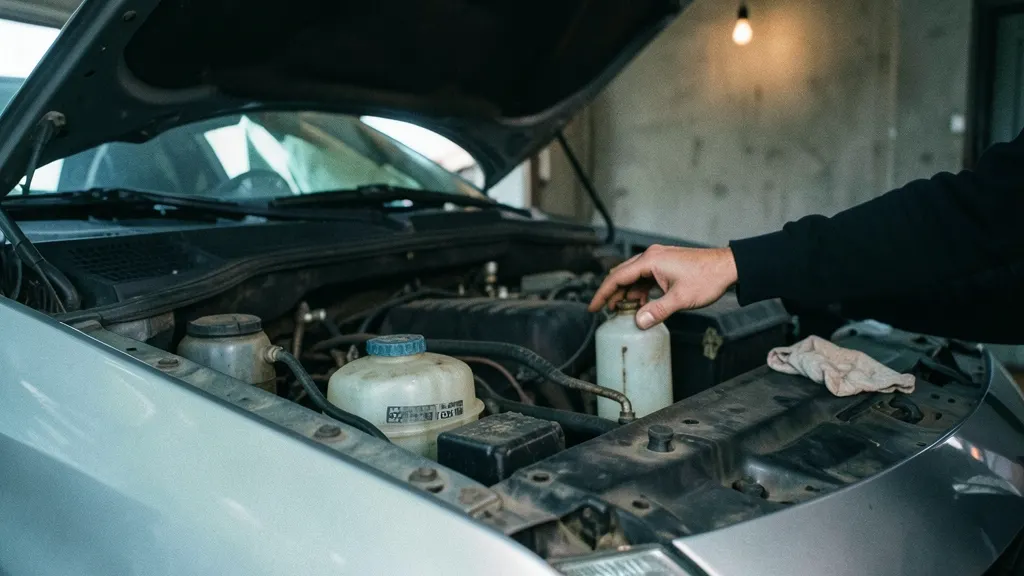
Run this routine in order, with the engine off:
- Oil: pull the dipstick, wipe it, reinsert, and read the level. Fresh golden oil is fine; thin black oil suggests a service is due. Milky or frothy oil is a red flag for coolant mixing with oil, which points to a head gasket problem. Walk away and have it checked.
- Coolant: check the level against the min and max marks on the expansion tank. Low coolant on a cold engine often means a leak somewhere. Do not open the cap or radiator when hot.
- Brake fluid: look at the reservoir level and colour. Dark fluid usually means it has not been changed in a long time.
- Screenwash: a trivial check, but a bone-dry bottle hints at general neglect.
- Leaks and tampering: look under the car for fresh drips and around the engine for wet patches. Fresh sealant, mismatched bolts or a spotless engine bay on an older car can mean a leak has been cleaned up or a repair hidden.
- Belts: press the belt between two pulleys. It should feel firm, with no glazing, fraying or cracks.
- Exhaust on start-up: blue smoke suggests burning oil, white smoke that persists after warm-up suggests coolant, and black smoke suggests fuelling problems. A little white vapour on a cold morning is normal.
If anything looks wrong and you are unsure, stop. A pre-purchase inspection by a mechanic is cheaper than a head gasket.
The Cold Start and the Test Drive Handover
A cold engine tells you things a warm one hides. Ask the seller, when you arrange the viewing, not to start or move the car before you arrive. If the bonnet is warm or the exhaust is hot when you get there, note it. A warm engine is not proof of concealment, but it does mean you cannot read the start, and you should say so and ask to see it from cold on a second visit.
Stand where you can see the tailpipe and listen as the key turns.
- The starter should turn briskly. Laboured cranking points to a weak battery or a tired starter.
- Listen through the first thirty seconds for tapping, rattling or a metallic scrape that fades as oil pressure builds, then note whether it returns.
- Watch the dashboard as the ignition comes on: warning lights should illuminate as a self-test, then go out once the engine runs. A light that never appears, or one that stays on, matters.
Look at the exhaust. Blue-grey smoke that clears is one thing; persistent blue smoke, thick white smoke once warm, or a sharp, sweet or fuel smell is another. Write down what you saw, in what colour, and for how long.
Only when the static checks pass should you move to the test drive checklist. Keep your notes. They give the mechanic something concrete to compare against.
Paperwork and Identity: V5C, VIN, Service History and Finance
Do the paperwork in this order, because each step tells you whether the next one is worth doing.
- Find the VIN in two places before you look at any document. The windscreen VIN (bottom corner on the driver's side in the UK) and the stamped VIN plate under the bonnet or on the door aperture should be identical, and neither should look scratched, re-riveted or freshly painted around. A mismatch or a tampered plate ends the viewing.
- Check the V5C against those numbers. In the UK the V5C is the registration document, not proof of ownership. The VIN, make, model, colour and engine number on it must match the physical car. A "V5C only" seller, a document applied for, or a photocopy is a reason to pause, not to proceed.
- Match the seller to the document. The name and address on the V5C should be the person in front of you, at the address on the document. A seller "selling for a friend", a trader posing as private, or a name that does not match is a red flag: you cannot easily trace them afterwards. Ask why they are selling and listen for a story that shifts.
- Read the service book for rhythm, not just stamps. Mileage and dates should climb in a consistent line. Gaps of years, stamps from a garage that does not exist, or a mileage that drops between entries point to neglect or clocking. A stamped book with no invoices is weaker evidence than a patchy book with receipts.
- Read the MOT history for advisories, not passes. An advisory for corroded brake pipes, worn suspension or tyre damage tells you what is coming. Repeated advisories for the same item suggest it was never fixed. Check the recorded mileage at each test against the service book.
- Run an HPI-type history check. It can flag outstanding finance, write-off categories and stolen markers. Treat it as one input, not a guarantee: it will not reveal accident damage that was never recorded, and it will not tell you whether the car was maintained. For how to interpret the results, see how to read a vehicle history report.
If any of these do not line up, stop and walk away. A car with unclear identity is not a bargain.
The 5-Minute Walk-Away Decision
The inspection produces findings, not a verdict. Sort every finding into one of three buckets before you discuss price, and the decision usually makes itself.
| Bucket | Findings | What you do |
|---|---|---|
| Stop | VIN on the car does not match the documents; seller's name is not on the registration document; outstanding finance or a write-off category you were not told about; evidence of flood damage or structural repair; seller refuses a cold start or refuses an independent inspection | Leave. No negotiation, no deposit |
| Negotiate | Tyres at or near the tread limit or mismatched; MOT advisories you can price mentally; minor cosmetic damage; missing service stamps | Use as leverage, but only after the mechanic reports |
| Investigate | Any warning light; smoke of any colour; fluid loss or fresh stains; suspension noise; panel misalignment you cannot explain | No money moves until a mechanic has seen it |
The table is a triage tool, not a price list. One "stop" item ends the viewing regardless of how good the rest of the car looks, because each one points to a problem you cannot fix with a discount: a mismatched identity, a hidden owner of the debt, or a repaired structure you cannot see. Two or three "investigate" items stacked together usually mean the same thing.
Never leave a deposit before the mechanic's inspection and the history check are both done. A deposit paid to hold a car is the seller's best tool for turning your caution into obligation. If the seller will not let you take the car to a garage of your choosing, treat that as a stop item. Pressure tactics, a sudden second buyer, or a demand for cash today belong in the same bucket.
Keep a sheet with three columns: finding, bucket, next step. If any row reads stop, you are finished. If rows read investigate, book the mechanic. If every row reads negotiate, you have a car worth pricing.
Final checklist
- Sort every finding as stop, negotiate or investigate.
- Walk away on identity mismatches, hidden finance, flood or structural repair.
- Refuse any seller who blocks a cold start or an inspection.
- Pay no deposit before the mechanic and the history check.
- Price only the negotiate items, and only after the report.
Frequently asked questions
Should I pay for a pre-purchase inspection on a cheap car?
Often yes, but scale it to the risk. On a cheap car, a basic inspection by a mobile mechanic usually costs a small fraction of what a missed clutch, head gasket or flood repair would. If the car is under roughly a tenth of your total budget and you can absorb losing it, a careful self-inspection plus a history check may be enough.
What if the seller refuses a cold start or a mechanic's inspection?
Treat a refusal as a red flag and walk away. A genuine private seller with nothing to hide has little reason to block a cold start, and most will accept an inspection arranged at your cost. A dealer who refuses an independent check is telling you something about how the car will be handled after you pay.
How do I check for outstanding finance if the seller says there is none?
Do not rely on the seller's word. Run a paid history check with a reputable provider using the registration and VIN, and read the finance section specifically. If finance is recorded, the lender may have a claim on the car even after you pay the seller, so get written confirmation of settlement before any money changes hands.
Can I inspect a car at night or in the rain?
You can look, but you cannot inspect properly. Rain hides paint and panel work, and darkness hides rust, kerb damage and interior damp. Use a first viewing to confirm the basics, then arrange a second daytime viewing before committing, or ask the seller to meet you somewhere with good light.
What should I do if the V5C is not in the seller's name?
Ask why, and be sceptical. A trader posing as a private seller, a car being flipped, or a stolen or cloned identity are all possibilities. If the seller cannot show a plausible chain of ownership and matching ID, walk away and look for another car.