AutoWriter AI
Seven Ways to Cut Your Weekly Food Bill Without Eating Plain Pasta
Week five is when the number stops being funny. The card taps have quietly added up, the first shop's optimism has curdled into a fridge of half-used things, and you still have eight weeks of term to feed yourself.
So: how do you cut the weekly food bill without living on plain pasta? Pick two or three tactics rather than all seven. They're grouped below by how much they move the number against how much effort they cost, so you can match them to the week you actually have. No invented averages, no martyrdom.
Table of contents
- Work Out Your Own Number Before You Cut Anything
- If You Only Do One Thing: Plan the Week Around What You Already Own
- If You Cook in Batches: Portion for One Without Drowning in Chilli
- If You Shop by Habit: Read the Unit Price, Not the Sticker
- If Your Basket Is Mostly Beige: Cheap Protein and Veg That Stretch
- If You Keep Topping Up Midweek: Plug the Convenience Leak
- If You Share a Kitchen: Decide Who Buys the Oil Before You Argue About It
Work Out Your Own Number Before You Cut Anything
Start with your own bank statement, not a blog post. There is no useful national average for a student food budget, because catered halls and a self-catered flat with four flatmates produce completely different numbers. The only figure that matters is what you personally spend now.
- Pick a three-week window and pull the transactions. Log into your banking app and filter for supermarkets, convenience stores, cafés and delivery apps. Export or screenshot the lot. Three weeks catches the odd big shop; two is the minimum.
- Count the taps you forget. The £2.40 meal deal, the £1.85 coffee between lectures, the corner shop run for milk and crisps. These are the ones that vanish from memory and quietly make up a chunk of the total. Your statement remembers them even when you don't. If your current account makes this awkward to review, it's worth looking at student bank accounts compared before next term.
- Include takeaways and coffee, not just the big shop. A budget that only counts supermarket receipts is fiction. The Friday kebab is food spending, and hiding it means your target is built on a number you don't actually spend.
- Divide by three and set a target slightly below it. Aim for a cut of roughly a tenth, not half. A target you hit for four weeks running teaches you more than a heroic one you abandon by Wednesday of week two.
And ignore what your flatmate claims to spend. Their baseline isn't yours.
If You Only Do One Thing: Plan the Week Around What You Already Own
If you plan one thing, plan backwards from your cupboard. Most first-years plan forwards: decide what to eat, then buy it. The cheaper loop runs the other way.
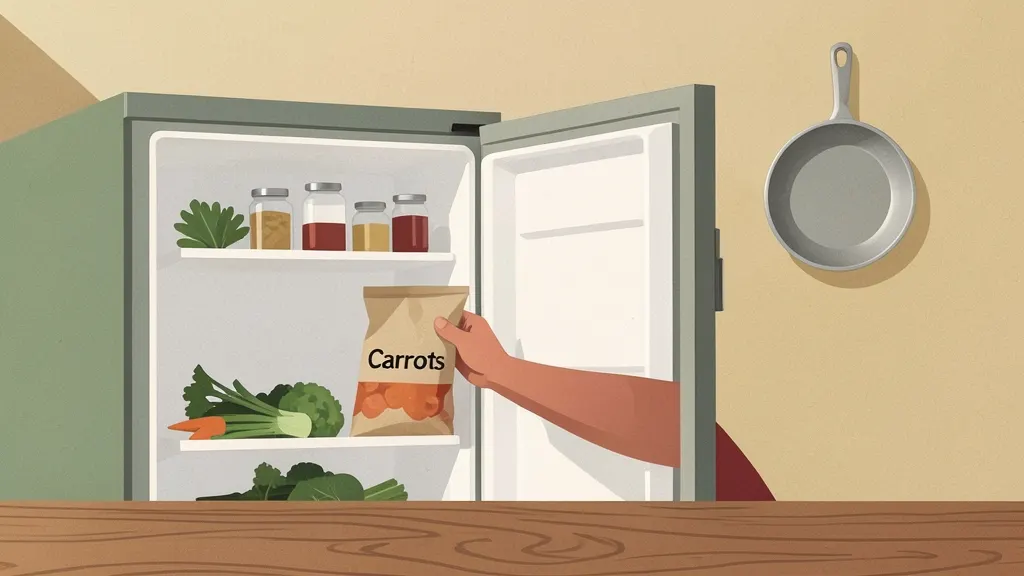
The ten-minute version, on a Sunday or any quiet evening:
- Open the cupboard and fridge and list what needs eating first: the half bag of rice, the eggs, the sad peppers.
- Sketch five or six dinners around those, not around a recipe site.
- Write the list of only what's missing.
Step three is where the money is. The plan is a nice idea; the list is the mechanism. A plan without a list turns into a vague intention, and vague intentions shop by mood. A list you actually stick to stops you buying a second jar of cumin you already own and a "quick tea" that duplicates Wednesday's.
Worked example. Base staples: rice, pasta, eggs, tinned beans, frozen veg. Two fresh additions: a bag of onions and a pack of chicken thighs (or a second tin of beans if money is tight). That gives bean-and-rice bowls, pasta with a tomato-and-onion sauce, egg fried rice with frozen veg, and a thighs-and-rice traybake. Five dinners, roughly, from a short list.
The honest limit: planning cuts waste, it does not delete it. Something will still go soft in the drawer. And a plan that ignores your actual week, the late lab, the friend's birthday, the shift that runs over, will be in pieces by Wednesday. Leave one night deliberately blank. That's not failure; that's the plan working.
If You Cook in Batches: Portion for One Without Drowning in Chilli
The failure mode of student batch cooking is a vat of chilli eaten four nights running until you never want to see it again. The fix is smaller batches and a rotating base.
Cook once, portion the moment it's cool enough, and write the date on each container. Fridge archaeology is how food gets binned, and binned food is money in the bin.
Two or three portions per batch is usually more realistic than ten. A first-year's freezer is often one shelf in a shared unit, and a portion you can't store is a portion you'll waste.
Better still, rotate the base rather than the whole meal. Cook a big pot of rice or a tray of roasted vegetables, then vary what goes on top: different sauce, different protein, whatever's reduced.
For storage times and reheating, follow official food safety guidance rather than a blog. Rules vary by food and by country, and this is not the place to guess.
Then there's the freezer itself. Agree shelf space with your flatmates before you fill it, not after. A labelled tub and a named shelf prevent more arguments than any rota.
If You Shop by Habit: Read the Unit Price, Not the Sticker
The shelf label under the pasta has three numbers on it: the pack price, the price per kilo, and sometimes the price per 100g. Most people read the first one and stop. Read the third one instead.

The biggest pack is not automatically the best value. It often is, but supermarkets also know that a large pack looks like a deal, and the unit price sometimes says otherwise. A 500g bag at £1.20 works out at £2.40 per kilo; a 1kg bag at £2.20 is £2.20 per kilo. Same shelf, different maths.
Own-brand versus branded is where unit prices earn their keep. Compare the price per 100g first, then turn both packets over and read the ingredient list. Sometimes the lists are near-identical and the cheap one wins outright. Sometimes they are not, and the branded version is genuinely a different product. You only find out by looking.
Watch multi-buys on anything that spoils. Three for two on fresh spinach is not a saving if two bags wilt before Friday. A multi-buy on tinned beans or rice is a different calculation entirely.
A supermarket price-match range is worth knowing about, since it usually covers basics at a set price. It is not worth a bus journey. If it is on your normal walk, use it; if not, the fare eats the difference.
If Your Basket Is Mostly Beige: Cheap Protein and Veg That Stretch
Beige is not the enemy. Bought at random, beige is just expensive. Bought as a set, it becomes a week of meals. The table below is the difference.
| Staple | What it becomes | Meals per pack |
|---|---|---|
| Eggs | Scrambled on toast, boiled as a snack, fried into leftover rice, folded into an omelette with any veg | 6 eggs, 4 or 5 meals |
| Tinned beans and pulses | Chilli, bean stew, cold in a salad, mashed into a sandwich filling, stirred through pasta | 2 or 3 meals per tin |
| Frozen peas and spinach | Handful into pasta, rice, curry, soup, or an omelette; no chopping, no wilting | 5 or more meals per bag |
| Rice | Base for curry, stir-fry, beans, or a cold lunch the next day | 6 or more meals per bag |
| Pasta | Base for tomato sauce, tuna, beans, or a bake | 4 or more meals per pack |
| Oats | Porridge, overnight oats, or a cheap crumble topping | 7 or more breakfasts |
| Potatoes | Baked, mashed, roasted, or in a soup | 4 or more meals per bag |
Frozen vegetables usually beat fresh for a single cook on both counts. You use what you need and the rest keeps, so the bag rarely ends up in the bin. Fresh veg bought for one recipe often does.
Eggs and tinned pulses are the cheapest way to turn a base into a meal. Rice with a fried egg and frozen peas is dinner. Pasta with a tin of beans and a spoon of tomato is dinner. Neither needs a recipe.
One caution: don't buy a specialist ingredient for one recipe. That jar of something you'll use once costs more per meal than the whole bag of rice, and it sits at the back of the cupboard until you move out.
If You Keep Topping Up Midweek: Plug the Convenience Leak
The top-up trip is rarely about hunger alone. It is about a freezer you forgot to check, a seminar that ran late, and a decision made at 6pm by someone who has not eaten since noon. Plug the predictable gaps:
- Keep two emergency meals in the cupboard, permanently. Examples: tinned tomatoes plus pasta plus a tin of beans; rice plus a tin of chickpeas plus frozen spinach. Both land under 20 minutes, and neither needs a plan.
- Restock them the day you use them, not "sometime". An emergency meal you ate last Tuesday is not an emergency meal.
- Carry a snack and a water bottle. Boring, unglamorous, and the cheapest defence against the £5 lunch you buy because you were hungry at 1pm with nothing on you.
- Plan takeaways instead of failing into them. If Friday is a takeaway night, put it in the week's plan and budget for it. A planned £12 is a line item; three unplanned £6 meal deals are a leak.
If You Share a Kitchen: Decide Who Buys the Oil Before You Argue About It
Two working models exist. Pick one on day one.
Shared kitty: everyone puts in a set amount each month for oil, salt, rice, pasta, coffee, washing-up liquid and bin bags. Separate shelves: you buy your own everything, label it if you must, and nobody touches it. Both are fine. A half-and-half arrangement, where the kitty covers oil but not bread, is where resentment grows, because nobody can remember which rule applies to milk.
Name the vanishing items early. Bread, milk, coffee and cooking oil disappear fastest, and usually without malice. A calm "shall we put oil and coffee in the kitty?" in week one is a hundred times easier than a passive-aggressive note in week six.
Then write it down. A shared note on someone's phone, or a simple app, recording who bought what, kills most arguments before they start. For the actual mechanics of settling up at the end of term, see how to split bills with flatmates.
The mistake worth avoiding: assuming everyone shares your definition of "communal". Ask the question out loud in the first week, before the oil runs out.
Frequently asked questions
Is it actually cheaper to shop at several supermarkets, or does the extra travel cancel out the savings?
It depends on the gap between the shops and how you travel. If a second supermarket is a short walk and you go anyway, splitting the list can pay off on a handful of staples. If it means a bus fare and an hour, the saving usually evaporates. Compare the unit prices on your five most-bought items first, then decide.
How do I plan meals when my timetable changes every week?
Plan for categories rather than days. Decide you need five dinners, four lunches and a few breakfasts, then cook whatever fits the evening you actually get. Keep two or three fallback meals in the cupboard for the late nights. A rigid day-by-day plan tends to collapse by Wednesday.
Are reduced-to-clear shelves worth planning around, or is that a lottery?
Treat them as a bonus, not a plan. Building your week around yellow stickers means some weeks you eat well and others you eat nothing you wanted. If you do buy reduced items, buy only what you can cook or freeze that day, otherwise the saving goes in the bin.
What should I do if my flatmates keep eating my food and I cannot afford to replace it?
Say it plainly and early, before it becomes resentment. Suggest a shared shelf and a shared fund for basics like milk, oil and rice, and keep your own expensive items in your room. If it continues, a labelled box and a calm conversation beat silent accounting.
Does a loyalty card or student discount card beat simply buying own-brand?
They solve different problems. Own-brand basics usually cut the price of the item itself, which works every week. Loyalty and student cards give you occasional discounts, so they stack on top rather than replace the cheaper product. Start with own-brand, then add the free cards.