AutoWriter AI
9 Houseplants That Survive a North-Facing Room (And How Far From the Window Each One Works)
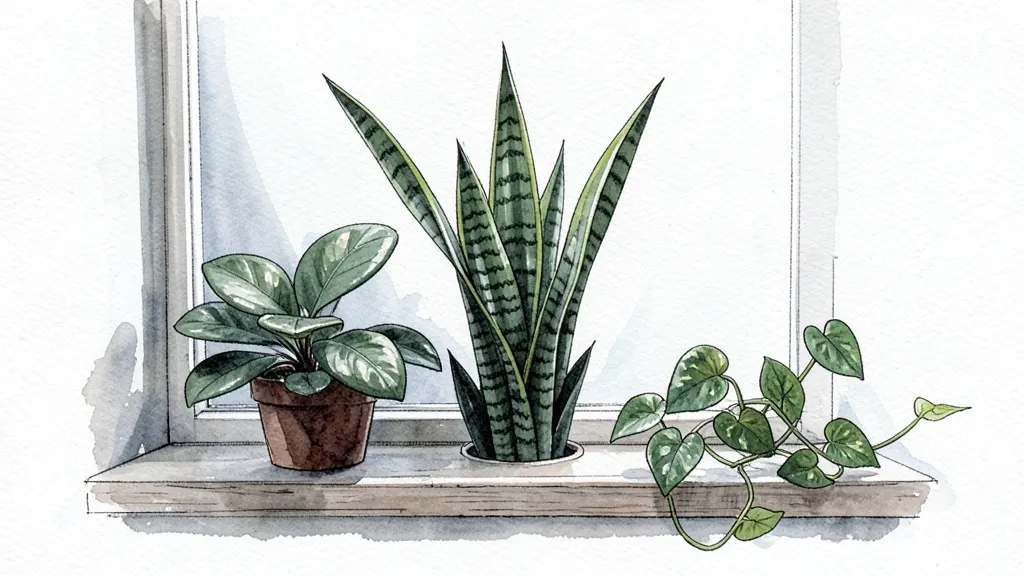
A plant tag that says "low light" tells you almost nothing. A north-facing window is a specific spot with a size, a distance from the glass and a season, and a ZZ plant two metres back from a small one is not living in the same conditions as a pothos on the sill. Below are nine plants that genuinely cope, ranked by how far from the window they will still perform, with the distance limits and caveats that matter. First, though, how to read your own room before you spend anything.
Table of contents
- How dim is a north-facing window, really?
- How can I judge my own spot without buying a light meter?
- Which plants actually cope, ranked by how far from the glass they will sit?
- Which 'low light' plants will sulk in a north room?
- How do I water and supplement light in a room that gets little sun?
How dim is a north-facing window, really?
A north-facing window in the northern hemisphere receives no direct sun at any point in the day. What comes through is diffuse sky light, and it is weaker than what an east, south or west window gets at the same size. On an overcast winter afternoon, a few feet inside the glass can look closer to dusk than to daylight.
"Low light" on a plant tag is not a measurement. It usually means "tolerates shade" or "won't collapse in a corner", which is a marketing judgement, not a number. Light is measured in foot-candles or lux, but no single figure is a reliable pass mark for a named species: tolerance varies by cultivar, temperature, pot size and how long the plant has been in that spot.
This is why surviving and growing well are different things. A plant that holds its leaves is surviving. A plant pushing new growth without long, pale gaps between leaves is growing well. Many "low light" plants do the first in a north room and never manage the second.
Your own room shifts the answer too. Wall colour, window size, nearby buildings, and the season (a June north window is far brighter than a December one) all change what the plant actually receives.
How can I judge my own spot without buying a light meter?
- Do the midday reading test. Sit where the plant would go and read a book or your phone screen around noon. Comfortable for hours means workable for most low light plants. Squinting means it is on the edge. Straining means too dark, even for a snake plant.
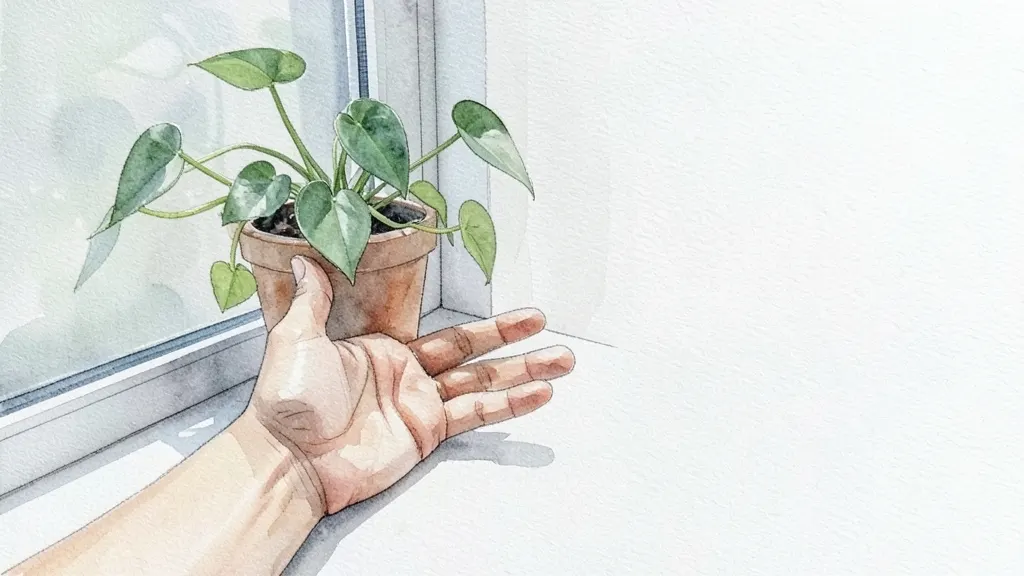
- Run the shadow test. Hold your hand over a white page. A soft but visible shadow means usable light. No shadow at all means the corner is decorative only.
- Measure from the glass, not the compass. A metre back from a north window is much dimmer than at the sill. Walk the spot with a tape measure and note the distance, because that number will matter more than "north-facing" when you pick a plant.
- List the obstructions. Net curtains, frosted glass, a balcony, a tree or a building opposite all cut light, and net curtains in particular can halve what reaches the sill. Be honest about what sits between the glass and your spot.
- Use a free light meter app for comparison, not precision. Phone sensors are not calibrated instruments, but the readings are fine for comparing the windowsill against the far corner. Take both readings at the same time of day.
- Repeat the test in winter. A spot that passes in June can fail in December, when the sun is lower and daylight hours are shorter. Judge the room in the season you are buying for.
Which plants actually cope, ranked by how far from the glass they will sit?
Ordered from most to least forgiving, with the distance that usually works. Treat distances as ranges, not promises: a big window, a white wall opposite, and a low obstruction all push the usable zone further back.
- Snake plant (Dracaena trifasciata). Slow, upright and structural, so it holds its shape even when growth nearly stops; suits a spot a metre or two back where you want something tall and calm. Caveat: it rots when watered on a schedule rather than when the soil has dried through.
- ZZ plant (Zamioculcas zamiifolia). The most tolerant of a dim corner of the nine, with thick rhizomes that carry it through lean spells; suits the far side of a north room. Caveat: new growth is slow, so damage from a bad spot can take months to show.
- Cast iron plant (Aspidistra elatior). The honest choice for a genuinely dark hallway, with broad leaves that cope where most plants stall. Caveat: it gets big, and it looks plain and slow.
- Pothos (Epipremnum aureum) and heartleaf philodendron. Cheapest and most forgiving, and quick to tell you when they are unhappy. Caveat: they still want to be near the glass, and back from it they lose variegation and stretch toward the window.
- Peace lily, spider plant, parlour palm and Chinese evergreen. Good near-window choices: at the sill or a metre back. Caveat: peace lily droops dramatically when stressed, and spider plant loses its stripes in deep shade.
Which 'low light' plants will sulk in a north room?
Some of the most common casualties in a north room were sold as shade plants. Here is what to leave on the shelf.
Prayer plant (Maranta) and Calathea. Sold as low light, but they generally want brighter indirect light to hold their leaf pattern and avoid crispy edges. In a dim north corner they often survive while looking progressively worse.
Succulents and cacti, including most echeverias. Often lumped in with "easy" plants. Without strong light they etiolate: stems stretch, rosettes open and flatten, and the plant never recovers its original shape.
Variegated plants in general. White and cream sections photosynthesise less than green ones, so a variegated version needs more light than the plain green plant beside it, not the same.
The tell-tale signs of too little light: long gaps between leaves, new leaves smaller than the old ones, stems leaning hard toward the glass, and loss of pattern.
Why the delay? A plant can look fine for months, running on reserves, before the deficit shows. Buy for the light you have, not the light you hope for.
How do I water and supplement light in a room that gets little sun?
Water to the soil, not the calendar. Low light slows growth, so the root ball dries out more slowly than the tag's advice assumes. Push a finger in: if the top few centimetres are dry, water; if not, wait. That habit matters more in a dim room than any schedule, and it's the same logic behind how often to water a snake plant.
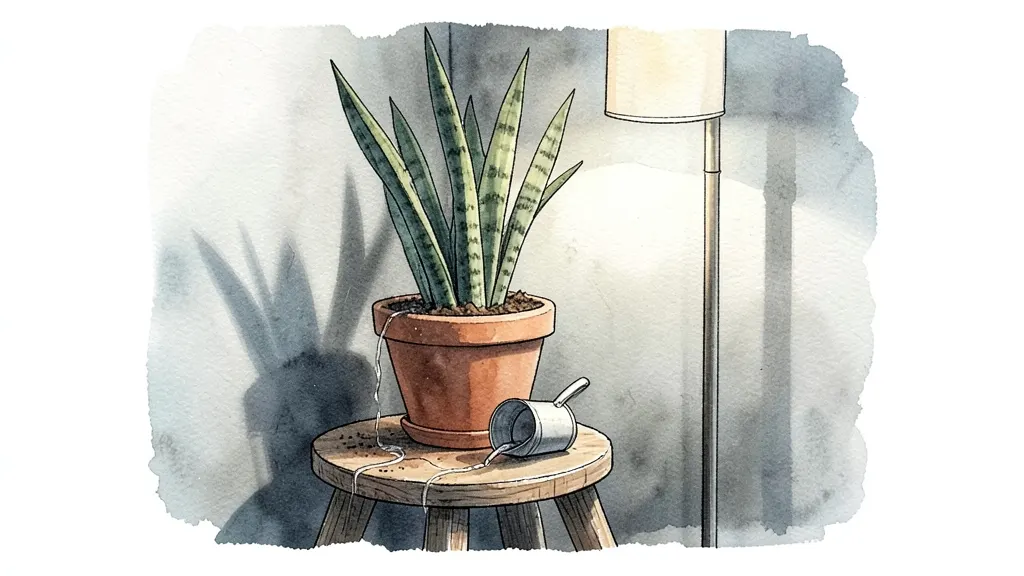
Symptoms tell you which problem you have. Pale, stretched stems and new leaves smaller than the old ones point to light. Yellowing lower leaves and soft stems sitting in wet soil point to overwatering.
Before buying a grow light, try the free fixes: white walls, a mirror opposite the window, and moving plants closer to the glass in winter, back a little in summer.
A grow light is an option, not a requirement. It earns its place in a genuinely dark corner or for keeping winter growth compact. If you're weighing one up, read whether grow lights actually work.
Today: check the soil of your dimmest plant before you water it again.
Frequently asked questions
My north-facing room has a frosted window. Does that change which plants I can keep?
Yes, but less than you might expect. Frosted glass scatters light and cuts the direct beam, yet it still lets through most of the daylight, so plants on the sill are usually fine. The bigger loss is the view of the sky, which matters for tall plants set back from the glass, so keep the tougher species like snake plant and ZZ plant closer in.
Will a snake plant or ZZ plant be fine in a windowless bathroom with the light on?
For a while, yes, but not indefinitely. Both tolerate very low light and slow down rather than collapse, yet a bathroom with no window and only occasional electric light gives them too little energy to grow, and the damp air raises the risk of rot. They survive months there; they do not thrive, so rotate them back to a brighter spot now and then.
My pothos is growing long vines with big gaps between leaves. Is that a light problem or a watering problem?
Almost always light. Long stretches of bare stem between leaves mean the plant is reaching for brighter conditions, and watering will not fix it. Move it closer to the window, or trim the vines back to a leaf node to encourage a bushier shape.
Is it worth moving plants to a brighter room for winter and back again in spring?
It can help, especially for plants sitting far from a north window when days are shortest. The catch is the move itself: a sudden shift to much brighter light can scorch leaves, so step it up over a week or two. Plants in the darkest spots benefit most; those already on the sill gain little.
Do I need to repot a slow-growing low-light plant less often?
Usually yes. Growth is slower in dim rooms, so roots fill the pot more slowly and the plant needs fresh compost less frequently than the same species in a bright spot. Check the rootball rather than following a calendar, and repot in spring if roots are circling the surface or emerging from the drainage holes.