AutoWriter AI
The Carry-On Packing List for Two Weeks in Changing Weather: Build It From Your Trip, Not a Template
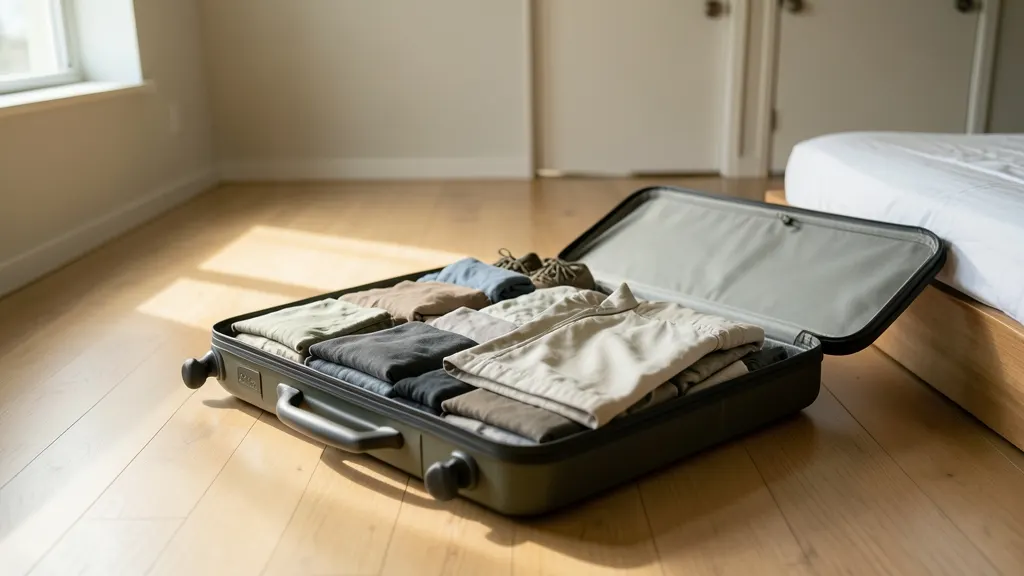
Five degrees at dawn, twenty-two by mid-afternoon, and one bag for two weeks. The fixed packing list fails here, because it was written for someone else's trip. This one is derived instead: define your temperature band, wetness risk and laundry access first, then build from a layers-not-outfits rule and a colour-locked capsule. Below is the checklist plus the reasoning behind every item, with the personal item treated as part of the same system.
Table of contents
- Define your trip's three variables before you pack a single item
- If you have laundry access: pack four to five days of clothing and wash twice
- If you have no laundry access: the layers-not-outfits rule
- The capsule wardrobe: lock a colour palette and everything mixes
- Rain and wind without a separate rain outfit
- The shoe limit: two pairs, three at most
- Split the system: what goes in the personal item
- The pre-departure pack test
Define your trip's three variables before you pack a single item
Start with a note on your phone. Three lines, before you open the wardrobe:
- Temperature band. Write the coldest morning and warmest afternoon you expect, not the daily average. Averages hide the problem: a 14°C average can mean a 5°C start and a 22°C afternoon, and that spread is what your layers have to cover. Check the forecast for the coldest point of the trip (an early start, a hilltop, a night bus) and the warmest (a sunny afternoon indoors or on a platform). Those two numbers set your outer layer and your lightest base layer.
- Wetness risk. Note how much rain and wind is likely, then ask how long you will be out in it. Two hours walking a coastal path in horizontal rain is a different problem from crossing a city between museums. The first needs a proper shell and a dry layer; the second might be an umbrella and a hood. Be honest about exposure, not just precipitation chance.
- Laundry access. Write one of three answers: a machine mid-trip, a sink and travel detergent, or nothing. This single line sets your clothing count more than anything else.
Two trips with identical forecasts can still need different bags. A week of indoor conferences and restaurant dinners needs far less weatherproofing than three days hiking in the same town. Record where you will actually spend your hours, then pack for that.
If you have laundry access: pack four to five days of clothing and wash twice
The count comes from the gap between washes, not the length of the trip. If you can do laundry every five days, five days of clothing covers two weeks. Packing fourteen days of anything means carrying a bag you could have washed your way out of.
A worked example. Two weeks, one machine wash on day seven, one sink wash around day ten:
- 5 base layers (tees or shirts)
- 2 pairs of trousers, one worn on travel days
- 5 sets of socks and underwear, plus a small buffer
- 1 midlayer, 1 packable insulation, 1 shell
That is a small pile, and it fits a carry-on with room for everything else.
Double up on socks and underwear anyway. They are small, and a wet bathroom floor or a slow dryer can strand you. Base layers can usually stretch a day; socks and underwear cannot.
Quick-dry fabrics matter most in the sink. A machine spin cycle and a heated dryer forgive cotton. A hotel sink and a towel roll do not. Thin synthetics or merino blends dry overnight; heavy cotton may still be damp at checkout.
Finally, do not build the plan around a washing machine you have not confirmed. "There's probably a laundrette nearby" is how people end up wearing the same shirt for four days. Check before you leave, and keep the sink wash as your fallback.
If you have no laundry access: the layers-not-outfits rule
Without a washing machine, your count stops being about days and starts being about layers. Stop thinking in outfits. Think in three pieces that stack: a base layer against your skin, a midlayer for warmth, a shell for wind and rain.
A cold morning is base, midlayer, shell. A warm afternoon is base alone, or base plus shell if it's wet. The same three pieces cover both, and the midlayer is the switch you flick. Two base layers, one midlayer, one shell, and you can rotate and air the base while wearing the other.
Merino or synthetic: merino feels better against skin, regulates temperature across a wider range and resists odour longer. Synthetics dry faster and cost less. Neither guarantees anything: a soaked merino base is still wet and cold. Carry two, wash one in a sink when you can, and don't count on any fabric staying fresh indefinitely.
Cotton is the weak link. It holds sweat and rain against your skin and dries slowly, which is exactly wrong for a trip with both. Leave the cotton tees at home.
The warmth layer: a packable down jacket compresses to almost nothing and gives the most warmth per gram for cold mornings and evening. A fleece or grid fleece is the better midlayer when you expect damp, active days: it insulates while wet and breathes better under a shell.
The capsule wardrobe: lock a colour palette and everything mixes
Two neutrals plus one accent. That's the whole rule. Choose a dark neutral (black, navy, charcoal), a light neutral (stone, white, sand) and one accent you actually like wearing. Then refuse anything outside it, including the "but it's so nice" impulse buy at the airport.
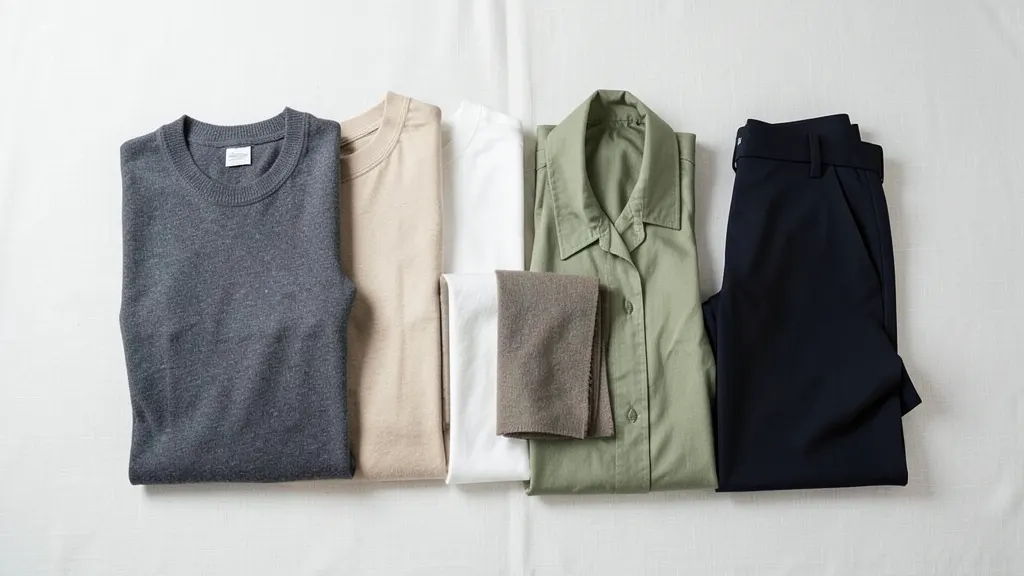
- Why it works: every top matches every bottom, so five tops and two bottoms give you ten outfits instead of two. One pair of trousers works with every top you brought because nothing clashes.
- Travel trousers with stretch as the default bottom: they dry faster than jeans, pack smaller, and handle a warm afternoon and a cold morning without feeling wrong. Jeans are heavy, slow to dry and offer no give on a long train ride.
- Swim shorts as dual-purpose shorts: they cover warm segments and double as hostel shower wear, so you're not packing a separate pair.
- What earns a place: two pairs of trousers, one pair of shorts, four to five tops, one midlayer, one packable warm layer, one rain shell, one set of sleepwear, underwear and socks for the laundry interval.
- What doesn't: anything that only works with one other item, or anything you'd only wear once.
Rain and wind without a separate rain outfit
The shell does one job: it goes over whatever midlayer you're already wearing that day. It is not a separate outfit. On a cold wet morning it sits over your fleece; on a mild afternoon it sits over a base layer. One jacket, no matching rain trousers, no dedicated "rain clothes" that live in the bottom of the bag for 12 days.
Rain shell or umbrella? An umbrella wins in steady, windless city rain: quick walks, coffee runs, waiting for a bus. A shell wins everywhere else, because wind turns an umbrella inside out and leaves one hand occupied. If your trip mixes both, take the shell and treat the umbrella as optional.
Vents matter more than waterproof ratings when you're walking in mild rain. Pit zips or a back vent let heat out so you don't arrive damp from the inside. A sealed, unvented shell in 18°C drizzle is a sauna.
Keep one full dry layer, base layer and socks included, sealed in a packing cube or dry bag. It weighs almost nothing and guarantees you have something to change into when the shell eventually wets through or you do.
Finally, fit: a loose shell layers over a fleece without compressing it, and trapped air is what keeps you warm. A tight shell looks sharper and defeats the system.
The shoe limit: two pairs, three at most
Start with one walking shoe or minimalist sneaker and one sandal or flip-flop. That covers pavement, trails, hostel showers and a beach without eating half your bag. A third pair is only justified when the trip contains a genuinely different mode: a dinner you'd feel underdressed for, a hike that would wreck a white sneaker, or a cold, wet segment where a soaked shoe needs a backup.
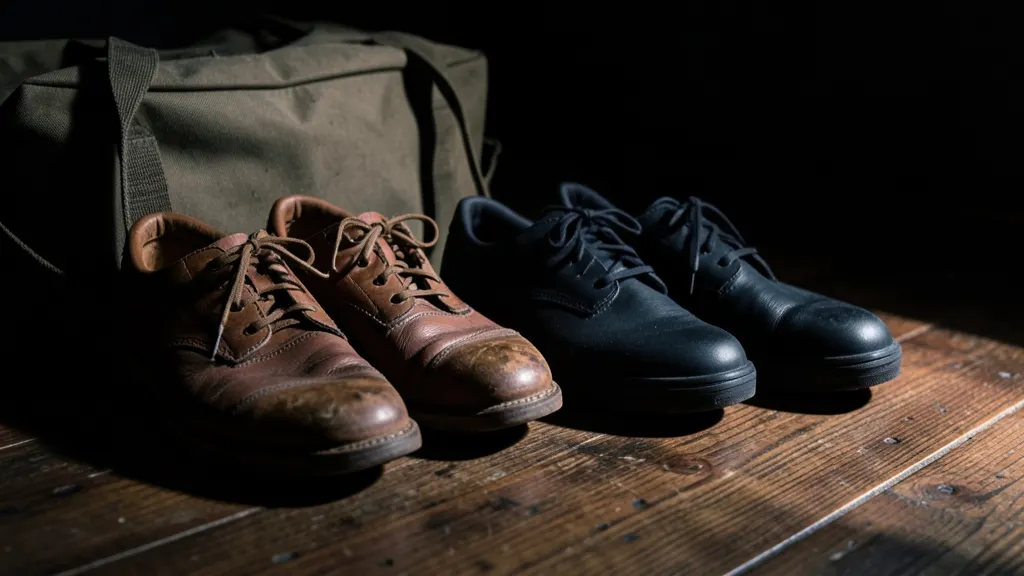
Shoes are the least compressible, heaviest thing you'll pack. They don't squash, they hold their shape, and every pair costs roughly the volume of several folded shirts. Wear the bulkiest pair on travel days and pack the flat ones.
| Pairing | Covers | Weak spot | Suits |
|---|---|---|---|
| Sneaker + sandal | Walking, casual evenings, showers, warm days | Rain, dressy dinners | Most trips, warm to mild weather |
| Sneaker + walking shoe | Long city days, light trails, cold and wet | No shower or beach option | Cooler trips with hiking |
| Sneaker + sandal + flats | Adds one dressy evening | Costs roughly a third of your shoe space | Trips with a formal event |
Two pairs is the honest default. Add the third only if you can name the exact day it saves, and accept what it takes from everything else.
Split the system: what goes in the personal item
The underseat bag is not overflow storage. It is the part of the system you keep with you, and it should be packed as deliberately as the main bag.
It holds what you cannot replace quickly or cheaply:
- Passport, boarding passes, cards, and a printed copy of key bookings
- Medications in original packaging, plus a basic first-aid kit
- One full change of base layer, socks and underwear, sealed in a cube
- Chargers, power bank, adapter, and any cables you need on the move
- Liquids and gels in a clear bag, sized to the limit
That change of clothes matters more than it seems. If your carry-on gets gate-checked at the last minute, the personal item becomes your only bag until baggage claim. One clean base layer, your meds and your documents turn a bad moment into an inconvenience.
On liquids, the principle is simple: small containers, one clear bag, checked against your airline and departure airport before you fly. Rules vary, so verify rather than assume.
Buy at the destination what is bulky or cheap locally: sunscreen, shampoo, an umbrella. None of these deserve suitcase space.
For organisation, a plain cube keeps the personal item from becoming a junk drawer. Compression bags only earn their place for bulky insulation layers, and they trade space for wrinkles. If you are still deciding, read whether packing cubes are worth it before you buy more.
The pre-departure pack test
- Pack the bag completely, then walk 20 minutes or climb a few flights. A fully loaded bag carries differently than a half-filled one, and strap or hip-belt problems only show up under real weight. This is also the moment to recheck those carry-on backpack features worth checking against how the bag actually feels on your back.
- Slot the bag into your airline's sizer, not just its published dimensions. Limits vary by airline and fare class, and a soft bag that measures right can still bulge past the frame when full. If your carrier publishes a sizer at the airport, use that one.
- Open and repack once, without emptying everything onto the bed. If you can't reach the rain shell without unpacking the whole bag, rearrange now, not in a hotel corridor.
- Pull out the one item you hesitated over and leave it home. If you don't miss it during the test, you won't miss it on the trip.
- Slide the personal item under a chair or low shelf with the carry-on above it. Confirm both fit together, since a stuffed underseat bag is the usual reason people get stopped at the gate.
Quick close-out checklist:
- Full pack, walked and carried
- Fits your airline's sizer, not just the spec sheet
- Repacked once without a full empty
- One hesitating item removed
- Personal item and carry-on tested together
Frequently asked questions
How do I pack for a trip that starts in a warm city and ends somewhere cold and wet?
Pack for the coldest, wettest point and wear the warmest layers on the flight. A thin base layer, a mid layer and a shell handle the cold end, and you strip down to the base layer in the warm city. This keeps the bag the same size from start to finish.
Is a carry-on backpack or a wheeled case better for two weeks of mixed weather?
A backpack suits cobblestones, stairs, rain and long walks between stations, while a wheeled case saves your back on flat city trips with lifts and smooth pavements. If your route includes wet weather and uneven ground, the backpack is usually the safer pick. Either way, check the exact size limits of every airline on your route before you buy.
How many pairs of socks and underwear should I bring for two weeks?
With laundry access, four to five pairs of each is enough, washed roughly twice over two weeks. Without laundry, plan on seven to eight pairs and accept that socks are the item most worth rinsing in a sink. Merino or quick-dry socks cut the number you need because they dry overnight.
Can I get away with one pair of shoes for a two-week trip?
Sometimes, if the one pair is broken in, waterproof enough for the wettest day you expect and smart enough for anything you have planned. The risk is that a soaked or blistered pair leaves you with no backup. Two pairs, worn and packed, is the safer default for mixed weather.
What should I do if my airline's carry-on limit is smaller than my bag?
Check the limit for the strictest airline on your route, not the most generous one, and measure your bag including wheels and handles. If it is over, move bulky layers to your personal item or wear them on board. Buying a smaller bag is cheaper than a gate fee, but only if you check before you fly.